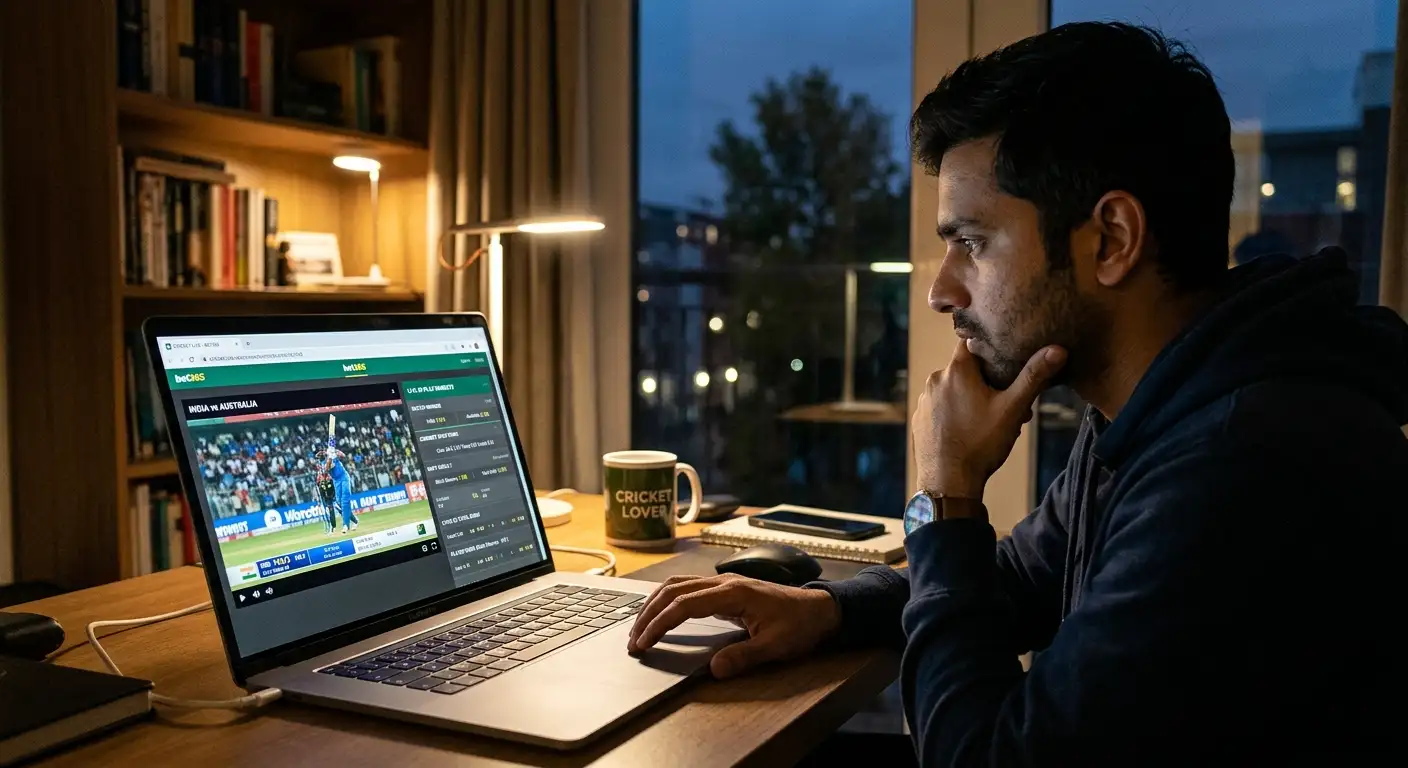
How to Bet on Cricket Online: A Step-by-Step Guide for UK Beginners
 Available in US
The first cricket bet I ever placed was a panicked tap during a Test at Lord’s, on a market I did not understand, with a stake I had not thought about. It lost in about four minutes. Eight years later I have watched hundreds of people make that exact same mistake, and almost all of it is avoidable. The mechanics of betting on cricket online are genuinely simple once someone walks you through them in order, and the order matters far more than beginners expect. Get the sequence right and you will never have that flustered, what-did-I-just-do feeling.
This guide is the sequence. I am writing it for someone in the UK who has never funded a betting account, who wants to back something during the next series, and who would rather not lose money to confusion before they have even lost it to bad luck. Sport betting is comfortably the largest slice of online gambling in this country, accounting for over 56 percent of online revenue, which tells you the rails you are about to use are well built and heavily trafficked. None of this is exotic. It is just unfamiliar, and unfamiliar is where avoidable errors live.
I will take you from picking a site through to pulling your winnings back out, with the genuine snags flagged where they actually happen rather than where guides usually pretend they happen.
Choosing a Licensed Site Before Anything Else
Here is the single decision that protects everything downstream, and most beginners skip straight past it because the adverts are loud and the sign-up offers are louder. Before you type a single card detail, you confirm the site holds a UK Gambling Commission licence. This is not box-ticking. It is the difference between a regulated business that segregates your money and answers to an ombudsman, and an offshore operation that can vanish with your balance and leave you with no recourse whatsoever.

The UK runs a single national regulator under the Gambling Act 2005, which is unusual and genuinely helpful. There is no state-by-state patchwork to decode the way there is across the Atlantic. A licence either exists or it does not. The licensed sector is large and easy to navigate, with more than 8,100 licensed gambling premises operating alongside the online brands, so you are spoilt for legitimate choice and have no reason to gamble with an unlicensed one.
Checking a licence takes under two minutes. The regulator publishes a public register, and every legitimate operator shows its licence details in the footer of its own site. If you want the full walk-through with the red flags I look for, it is worth learning to read the regulator’s public register yourself. For now, the rule is blunt: no verifiable licence, no account, no exceptions. I have never bent this rule and neither should you.
Beyond the licence, I weigh three things when I pick where to bet on cricket: the breadth of markets the site offers for the formats I follow, how competitive its prices are, and whether its responsible-gambling tools are easy to find and actually work. Bonuses come dead last in my thinking, which surprises people. A generous welcome offer attached to a thin market list and lazy pricing is a worse deal than a plain account with sharp odds. You will be using this site for years, not for one free bet.
Creating an Account and Funding It Sensibly
I watched a friend abandon three different sign-ups last summer because he kept hitting the identity-verification step and assuming something had gone wrong. Nothing had gone wrong. That step is the law working as intended, and knowing it is coming removes all the friction.
Registration itself is the boring part. You provide your name, date of birth, address and email, you choose a username and password, and you confirm you are over 18. Every UK-licensed site is legally required to verify your identity and age before you can withdraw, and increasingly before you can deposit, so most will ask you to confirm your details against public records automatically. Occasionally they ask for a photo of your passport or driving licence and a recent utility bill. This is normal, it protects you as much as them, and it is far smoother to do at sign-up than to discover halfway through trying to cash out a winner.
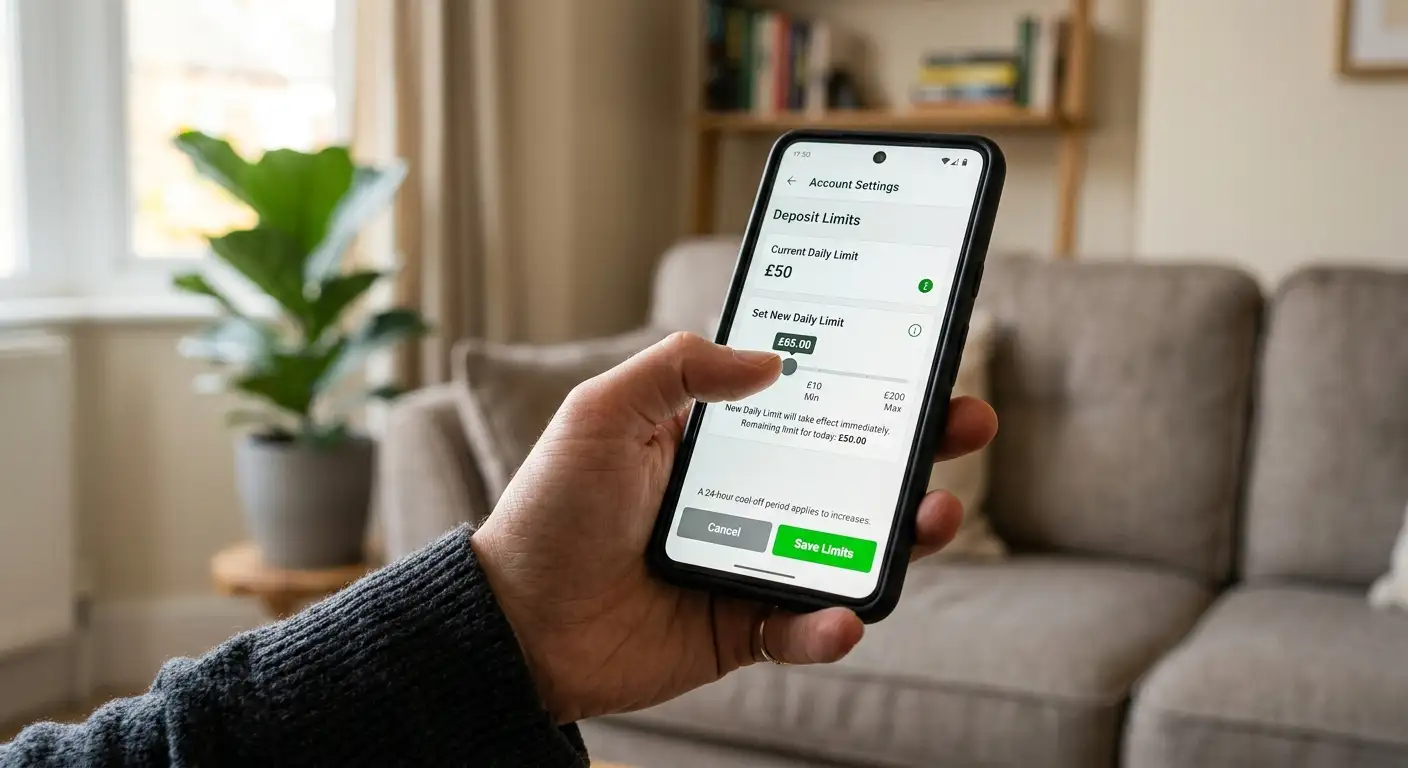
Funding the account is where I want you to slow down for thirty seconds. Before you deposit anything, set a deposit limit. Every licensed site offers them, they take one tap to configure, and they are the most effective discipline tool I know because they work before temptation rather than after regret. Decide what a betting budget looks like for you in a week or a month, set the limit to match, and then deposit within it.
On payment methods, debit cards are the default and clear instantly. Credit cards are not an option for gambling in the UK, that route was closed off by regulation, and frankly that is a sensible restriction you should be glad of. E-wallets are popular because they add a layer between your bank and the bookmaker and often speed up withdrawals. Start with a debit card, keep your first deposit small, and treat it as money you are prepared to lose entirely, because that is the only honest way to think about a stake.
Finding a Market and Placing the Bet
The moment that tripped me up at Lord’s was this one, so I will be specific. You have funded an account, a match is coming up, and now you are staring at a screen offering dozens of markets with names that mean nothing yet. The trick is to ignore almost all of them at first.
Navigate to cricket, then to the specific match. The market you want for your first bet is the match winner, sometimes called match result or to win the match. It is the simplest proposition in the sport: you are backing one team to win. You will see each team listed with a price next to it. Tap the price for the team you fancy, and that selection drops into your bet slip, which is the running tally of what you are about to stake.

On the bet slip you type your stake, the amount of money you are putting down. The slip immediately shows your potential returns, which is your stake plus your winnings if the bet comes in. Read that number, make sure you are comfortable losing the stake, and only then confirm. That pause between seeing the returns and confirming is the entire discipline of betting compressed into one second. Use it.
Once you are comfortable with the match winner, the sport opens up. There are runs markets, top batsman and top bowler markets, and dozens more, each with its own logic. I would not touch them on day one, but when you are ready, they reward patience and study. The single biggest beginner error I see is jumping straight to the exotic markets because they pay more, without understanding that they pay more precisely because they are harder to win. Before any of that, though, it pays to understand how money moves in and out of your account, which I cover in my guide to cricket betting payment methods and withdrawal timings.
Tracking Your Bet and Withdrawing Winnings
Most guides stop at placing the bet, which always struck me as odd, because the bit beginners actually worry about is getting their money back.
Your open bets live in a section usually labelled my bets or bet history. You can watch a bet settle in real time if the match is live, and the moment it wins, your balance updates automatically. There is no claiming, no chasing, no paperwork. The money is simply there.
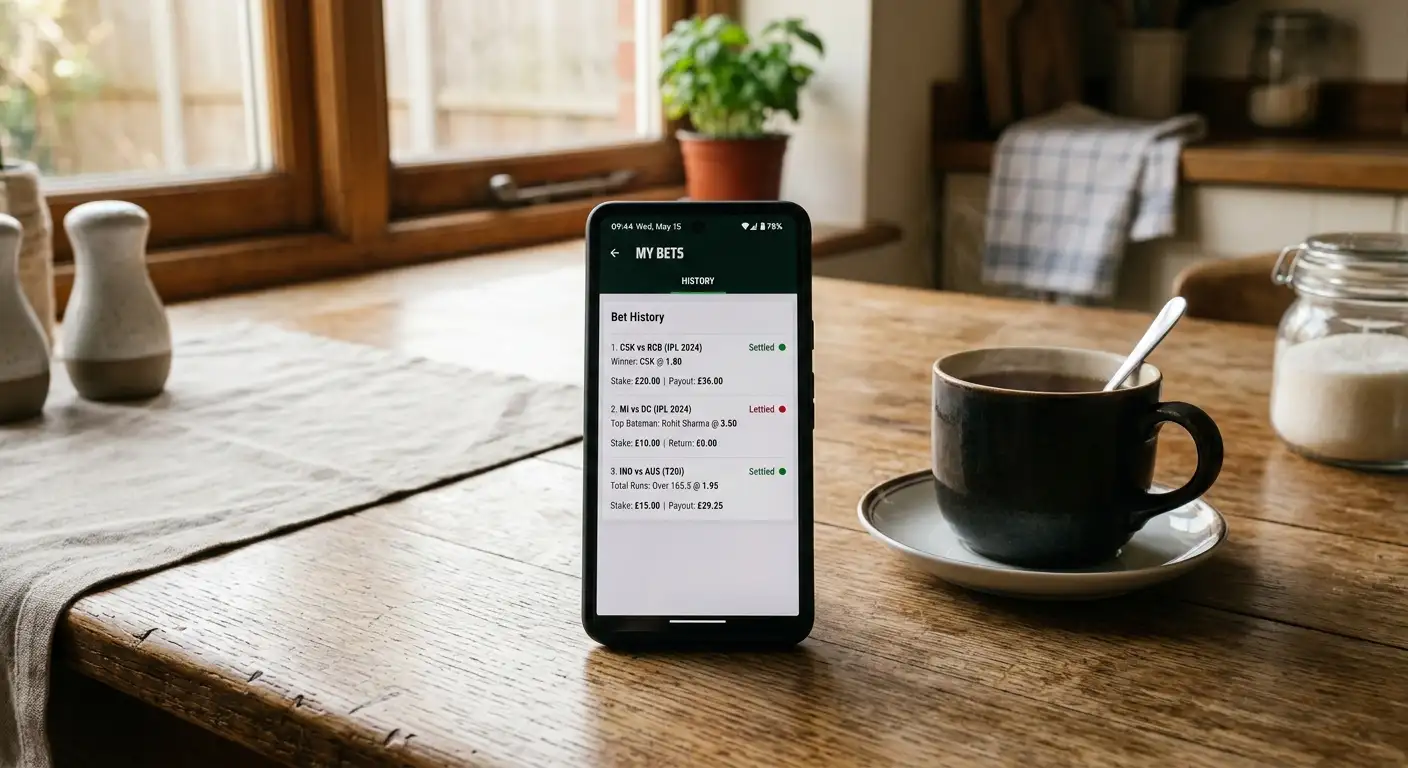
Withdrawing is the mirror image of depositing. You request a withdrawal, choose your method, and the funds head back to wherever they came from, which is a deliberate anti-fraud measure: money out follows money in. Debit card withdrawals typically take one to three working days, e-wallets are usually faster, and the timings are published on every site so you can check before you commit. The one thing that delays withdrawals is unfinished identity verification, which is exactly why I had you sort that at sign-up rather than now.

A closing thought from someone who has done this for a living. The mechanics you have just learned are the easy 10 percent. The hard 90 percent is the temperament: betting within a budget you set in advance, walking away when the limit is reached, and treating a losing run as the cost of entertainment rather than a debt to be chased. The England and Wales Cricket Board put the principle well when it said the relationship between gambling and sport needs to be conducted responsibly to protect participants and supporters from gambling-related harm, and that protective instinct is exactly the one you should carry into your own account. Set your deposit limit, place small, and let the experience teach you slowly. That is how this stays fun.
Do I need to verify my identity to bet on cricket?
Yes. Every UK-licensed site is legally required to confirm your identity and age, usually automatically against public records, sometimes by asking for a photo ID and proof of address. Completing this at sign-up means there is nothing to hold up your first withdrawal later.
What is the minimum deposit at UK cricket sites?
It varies by operator and payment method, but most licensed sites accept small first deposits, often around five pounds with a debit card. Start small regardless of the minimum, set a deposit limit first, and treat that money as funds you are prepared to lose entirely.
Prepared by the Best Cricket Betting Sites editorial staff.