Best Cricket Betting Sites UK: A Data-Led Guide for 2026
 Available in US
Britain wagered a staggering amount on gambling last quarter, and the regulator’s own ledger puts a number on it: the combined gross gambling yield of the UK industry for the final three months of 2025 came to 4.5 billion pounds, up 2.27 percent on the year before. That figure is the backdrop to everything on this page. When you pick a cricket betting site you are stepping into one of the most heavily regulated, most closely measured gambling markets on the planet, and the best cricket betting sites are the ones that turn that scrutiny into something useful for you rather than a line of small print.
I have spent eight years evaluating bookmaker lines for cricket specifically, across Test, ODI and T20, with an eye on integrity rather than bonus size. In that time the marketing around “best cricket betting sites” has become almost interchangeable: the same matched free bet, the same in-play markets, the same glowing verdict. What none of them tell you is how the UK market actually works, what a licence really obliges an operator to do, or why the overround buried in a price matters far more to your returns than a 20 pound welcome offer ever will. This guide does it differently, leading with the regulator’s data because that is the genuine edge, and showing you how I separate a serious operator from a loud one, how to read a price, which markets are worth your stake, and how the UK’s player-protection framework stands behind every bet.
Table of Contents
- What This Guide Settles in Five Lines
- What Actually Separates a Good Cricket Site from a Loud One
- The UK Betting Market in Numbers
- How I Judge a Cricket Betting Site
- Comparing Sites by What They Do, Not by a League Table
- Reading the Price: Odds and the Overround
- Cricket Odds & Overround Calculator
- The Cricket Markets Worth Knowing
- The Cricket Calendar You Can Actually Bet On
- Free Bets and Welcome Offers, Read Honestly
- Betting While the Ball Is Live
- Legality, Licensing and What That Actually Buys You
- Integrity: Who Is Watching the Cricket You Bet On
- Staying in Control, and Where to Turn When You Are Not
- Questions UK Cricket Bettors Keep Asking
- Picking Your Site With Your Eyes Open
What This Guide Settles in Five Lines
- The overround, not the welcome offer, decides your long-term returns: a site at 4 to 5 percent margin on Tests and ODIs pays more than one at 7 to 8 percent on every winning bet.
- The UK is a vast, regulator-watched market, with 4.5 billion pounds of gambling yield in the last quarter of 2025 and sports betting making up 56.64 percent of online revenue, which keeps margins tight.
- Verify any site’s licence by number on the public register, not by the footer badge.
- There is no single best site; match your bettor profile to the operator sharpest where you bet most.
- Set a deposit limit, switch on reality checks, and bet only what you can comfortably lose.
What Actually Separates a Good Cricket Site from a Loud One
A few years ago a reader emailed me, furious, because his “five-star recommended” bookmaker had paid him less on a winning Ashes bet than a rival would have on the identical selection. He had simply trusted a ranking that scored sites on the wrong things. That email taught me what this section is about: the loudest features are rarely the ones that decide whether you come out ahead.
The single most important quality in a cricket betting site is the price it offers, governed by the overround, the bookmaker’s margin. On international Test and ODI markets the sharpest UK operators run a margin of around 4 to 5 percent, against an industry norm closer to 5 to 8 percent. That gap sounds trivial until you realise it compounds across every bet you ever place: a site that shaves two points off its margin is, in effect, paying you a small rebate on every winning slip for the rest of your betting life.
Overround — the total implied probability of all outcomes in a market added together. A fair market would sum to 100 percent; a book sets it higher, and the surplus over 100 percent is its margin. Lower overround means better value for you.

Market depth is the second pillar. A site that posts only a match winner and a top batsman market is selling you a thin sliver of the game. The operators worth your time price the full surface of a match, from session runs to method of dismissal to player props, and keep those markets live through an innings rather than freezing them at the toss. After price and depth come the protections that never appear in a banner: a verifiable licence, segregated customer funds, working deposit limits and a clean settlement record.
The UK’s licensed land-based footprint gives a sense of the framework you are betting inside: 8,148 licensed gambling premises in Britain, including 5,669 betting shops, housing 191,325 gaming machines between them. The online operators you will actually use sit under the same regulator and the same obligations as that physical estate.
Be suspicious of any guide that scores cricket sites primarily on bonus size. A free bet is a one-time marketing cost to the operator; the overround is charged on every bet you make. Optimise for the bonus and ignore the margin, and you trade a single small gain for a permanent small leak.
The UK Betting Market in Numbers
Ask a casual punter how big UK betting is and you will get a shrug. Ask the regulator and you get a precise, audited answer every quarter, and those numbers tell you more about your bookmaker than any review could. A market this large is one with real competition, thin margins and operators who cannot afford to be careless.
Start with the headline. The whole UK gambling industry produced 4.5 billion pounds of gross gambling yield in the last quarter of 2025. Across the full year, the aggregated yield of the remote sector, meaning online casino, betting and bingo combined, reached 5.55 billion pounds. Within that final quarter, remote operations alone generated 2.12 billion pounds, of which remote betting accounted for 599.05 million pounds. To put it in perspective, remote real-event and casino betting churned through 39.18 billion pounds of turnover in the same quarter, a reminder that a well-run book operates on thin slices of enormous volume.
Gross gambling yield, or GGY — the amount operators keep after paying out winnings, before their own costs: stakes received minus prizes paid. When the regulator says the remote sector produced 5.55 billion pounds of GGY, that is the industry’s gross take from players, not the total amount staked, which is far larger.
Zoom out to the online sector and the trend is unmistakable. Britain’s online gambling sector generated 6.9 billion pounds of GGY across the year from April 2023 to March 2024, and sports betting is the largest slice of that pie at 56.64 percent of online revenue in 2024. So when you bet on cricket, you are not in a niche corner of the industry; you are inside its biggest, most contested segment, where operators fight hardest for your custom.
The UK accounted for 9.4 percent of global online gambling revenue in 2024, and the online sector is forecast to grow at a compound annual rate of 12.8 percent between 2025 and 2030. Sports betting is the dominant online category at 56.64 percent of revenue. Translation for you: this is a growing, competitive, regulator-watched market, which is precisely the environment in which margins stay tight and protections stay enforced.

Why does this change how you pick a site? Because scale and growth shape behaviour. In a shrinking or lightly regulated market, operators can afford fat margins and sloppy terms; in a market this size, growing this fast under a regulator this active, the operators competing for the sports-betting majority cannot. The pressure that pushes Test-match overround down to 4 to 5 percent is a direct product of these numbers, and the same competition explains why the better books invest in market depth, faster settlement and slicker in-play engines. None of that is generosity; it is how an operator wins a sliver of that online pie.
How I Judge a Cricket Betting Site
People assume I rate sites by feeling whether the interface is nice. It is the opposite: the first thing I do with any operator is open the same Test match on each and write down the prices, because the price tells me more in thirty seconds than an hour of clicking ever could. My process runs in a fixed order, and price comes first. I take a standard market, usually the match winner on an international fixture, convert every price to its implied probability, and add them up; the total over 100 percent is the overround. A book around 4 to 5 percent on a Test or ODI is working hard to compete; one at the top of the 5 to 8 percent band is asking you to subsidise its comfort. I repeat the exercise on a T20 and a domestic fixture, because margins shift by format and a site sharp on internationals can be lazy on the County Championship.
Second, I count and stress-test the markets. The widest UK cricket offerings stretch beyond 150 markets on a single Test and 80-plus on an IPL or T20 fixture, but the headline number does not impress me.
Market depth without availability is theatre. A site can advertise 150 markets and still be useless to an in-play bettor if half of them suspend the moment anything interesting happens. I weight depth by how reliably those markets stay tradeable when you want them, not by the count on the lobby page.
Third comes the licence, which I treat as a pass-or-fail gate rather than a scoring category. If an operator is not properly licensed by the regulator, the review ends there; the mechanics of checking the public register belong in the dedicated walkthrough on safe and legal cricket betting in the UK. Fourth and fifth are settlement reliability and the responsible-gambling toolkit, which I test by actually using deposit limits, reality checks and self-exclusion rather than taking them on faith. Here is the condensed checklist I run before recommending any site.
Before you trust a cricket betting site, confirm:
- The licence is verifiable on the regulator’s public register by number, not just a badge in the footer.
- The overround on a standard Test or ODI sits in the sharper 4 to 5 percent range, not the 7 to 8 percent end.
- Cricket market depth stays tradeable in-play, not a long list that suspends under pressure.
- Deposit limits, reality checks and self-exclusion are present and actually function.
- Customer funds are held under the protection the licence requires, and the settlement record is clean.

Notice what is absent: bonus size. A welcome offer is the last thing I look at, and only as a tie-breaker between sites that have already cleared everything above.
Comparing Sites by What They Do, Not by a League Table
The honest answer to “which site is best” is a question back at you: best for what? I once spent an afternoon convincing a friend that the operator I used was wrong for him. He bet small, occasional outrights and never touched in-play; the sharp in-play engine I valued was irrelevant to him, where he needed early outright pricing and a clean mobile flow. We were both right about our own sites and wrong about each other’s. That is why I will not hand you a ranked table of named operators. A league table pretends there is one winner for everyone, and there is not. What helps is a comparison by profile, so you can match the kind of bettor you are to the kind of site that suits you.
| Bettor profile | What matters most | What to check first | Where margin bites |
|---|---|---|---|
| Value-focused, places considered single bets | Lowest overround on core markets | Implied-probability total on match winner and totals | Every bet, permanently |
| In-play and live trader | Market availability and fast suspension recovery | Whether deep markets stay open through an innings | Live markets, which run wider margins |
| Tournament and outright bettor | Early pricing and depth of futures markets | When outright odds are released and how many runners are priced | Long-shot outrights, often heavily loaded |
| Casual mobile bettor | Usability, settlement speed, working tools | App stability and that limits and reality checks function | Convenience markets and novelty specials |
| Multiples and accumulator bettor | Acca cover terms and combined-price fairness | How insurance triggers and the true combined overround | Compounded margin across every leg |
Read down the right-hand column and a theme repeats: margin bites everyone, just in different places, so matching your profile to a site is really about working out where you are most exposed to the overround and choosing the operator sharpest exactly there.
Market depth interacts with profile too, but breadth only earns its keep for certain bettors. If you live in session runs, method-of-dismissal and player props, depth is everything; if you place one outright a month, a site with fewer markets but sharper outright pricing serves you better. Once a site has cleared my checklist, this is the at-a-glance framework I use to size it up.
Licence
Verified by number on the regulator’s public register, not just a footer logo. This is the pass-or-fail gate.
Market depth
How many cricket markets, and crucially how many stay tradeable in-play. Breadth is only worth what you can actually bet into.
Overround
Your measured margin on a standard Test or ODI, ideally in the 4 to 5 percent range rather than the 7 to 8 percent end.
Player tools
Deposit limits, reality checks and self-exclusion, tested for whether they actually work, not merely whether they exist.
Best Odds Guaranteed
Whether the site offers it on cricket and on which markets, since it can quietly add value on outright and ante-post bets.
Fill that grid in for two or three sites that have passed your licence and margin checks, and the right operator tends to announce itself. The point of comparing by characteristic rather than by brand is that the answer scales with how you bet: there is no universal “best” cricket site, only the best fit for the profile you are. One flag, though: the richest in-play and player-prop markets are also the ones carrying the most integrity risk, a subject I return to shortly.
Reading the Price: Odds and the Overround
Here is a question I put to anyone who tells me they bet on cricket: when you back a team at evens, do you know what probability the bookmaker thinks that outcome has? Most people guess 50 percent, and the gap between that guess and the truth is the bookmaker’s whole business model.
How a Decimal Price Is Built
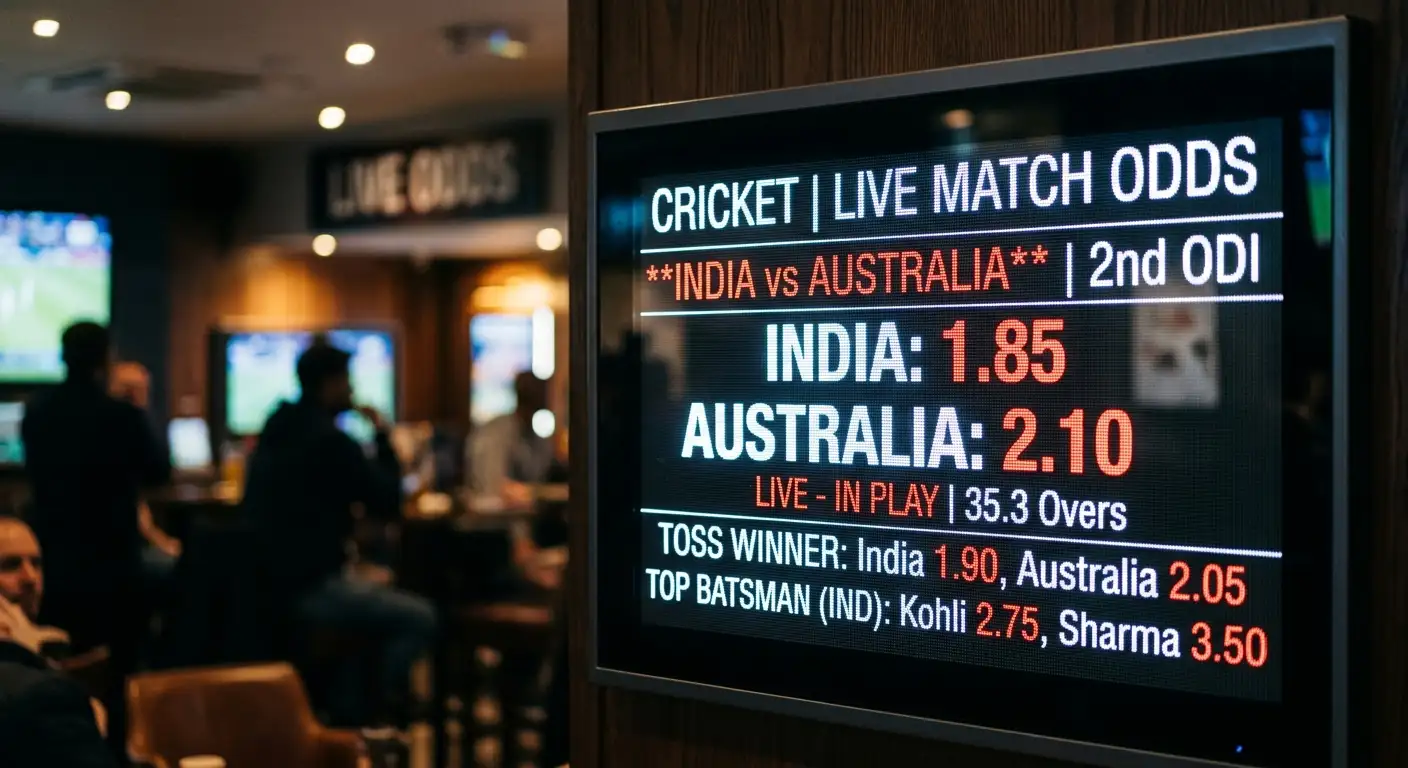
A price is just a probability in disguise. Decimal odds of 2.0, the evens example, imply a 50 percent chance, because one divided by 2.0 is 0.5; odds of 1.5 imply 66.7 percent, odds of 4.0 imply 25 percent. Convert every outcome to its implied probability and add them up, and a perfectly fair market would total exactly 100 percent. It never does. The amount it exceeds 100 is the overround, the margin the book charges you for taking the bet.
Implied probability — the chance of an outcome as expressed by its odds. For decimal odds, it is one divided by the price, shown as a percentage. It is the bridge between the number on the screen and what the bookmaker actually believes, and learning to read it is the most useful skill in betting.
Example calculation: a two-way match winner market
Suppose a T20 match is priced with Team A at 1.90 and Team B at 1.90. Each implies 52.6 percent, because 1 divided by 1.90 is 0.526, so the market totals 105.2 percent.
The overround is 105.2 minus 100, or 5.2 percent, the share the book expects to keep regardless of who wins. Price the identical contest at 1.95 a side instead and the margin falls to 2.6 percent, less than half the charge.
Calculator
Cricket Odds & Overround Calculator
A price is a probability in disguise. See the bookmaker’s margin baked into any cricket market — before you stake.
Enter the decimal price for each outcome. The bar fills with the real implied probabilities; anything spilling past the 100% line is the bookmaker’s margin.
Combine several selections into one bet. Every leg must win — and every leg’s margin compounds, which is the part the headline price hides.
Read any decimal price as the probability the bookmaker thinks it has — the most useful skill in betting.
What the margin costs you in money: stake 50 pounds at 1.90 and a winner returns 95 pounds; the same 50 pounds at 1.95 returns 97.50 pounds. Two pounds fifty on one bet looks small, but place 200 winning bets a year at that gap and you have handed the wider-margin book 500 pounds for nothing. The overround is a tax you can shop around.
Where the Margin Bites Hardest
Margin also varies by market type, and player-specific and live markets are where books load it heaviest. Player props and in-running prices make up more than 35 percent of all cricket bets placed worldwide, while the straightforward match winner accounts for around 40 percent of volume. Because those player and live markets are harder to price and more popular, that is where operators feel safest widening the margin. The lesson is not to avoid them but to be sharper about the price you accept inside them.
This is deliberately a primer. Converting between decimal and fractional formats, and calculating a book’s margin across multi-runner markets, get fuller treatment in the bet-types cluster and its supporting articles. For now, hold onto the one idea that changes how you bet forever: the price is a probability, the probabilities never sum to a fair 100 percent, and your job is to give the book as little of that surplus as the market allows.
The Cricket Markets Worth Knowing
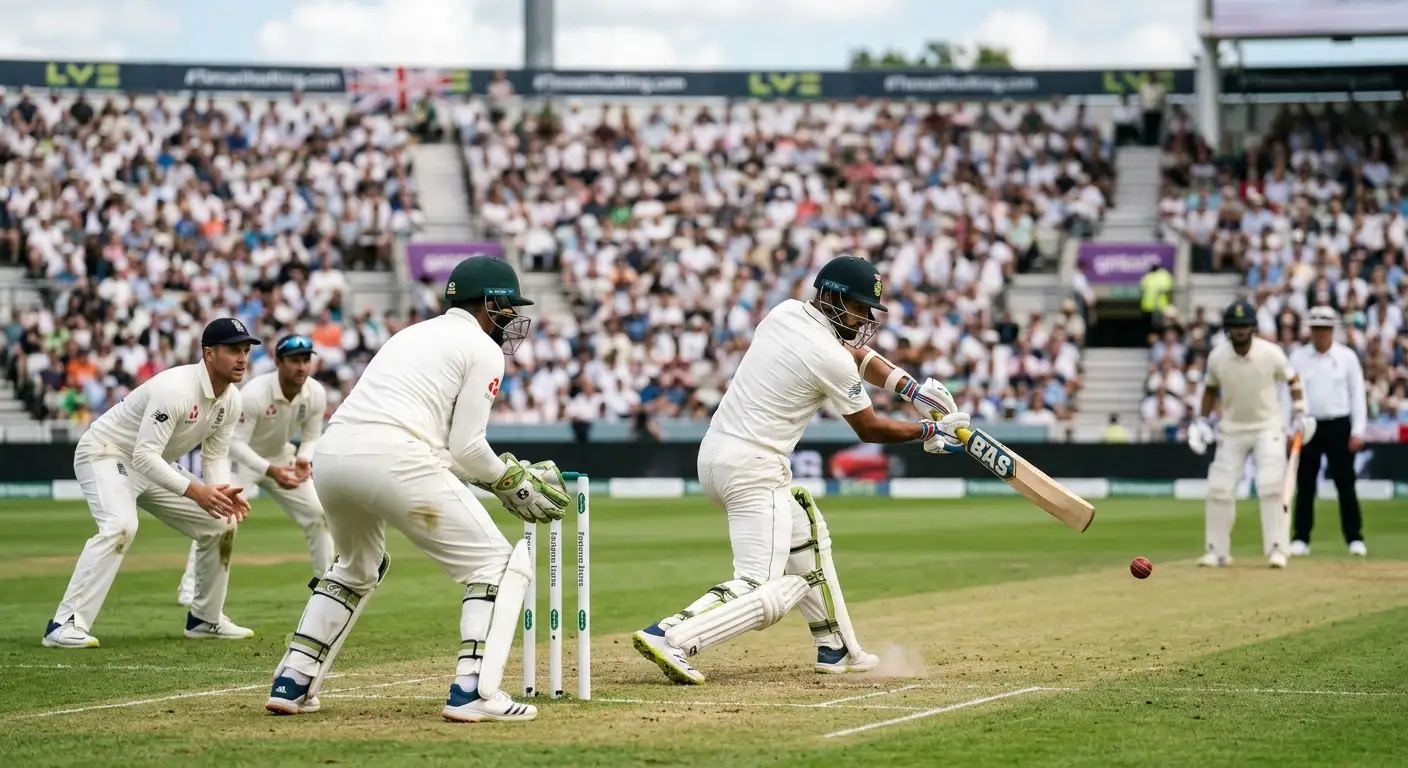
The first cricket bet I ever placed was a match winner, because it was the only market I understood. It took me an embarrassingly long time to realise that the most interesting, and sometimes most beatable, value sat in the markets I had been scrolling straight past. Cricket is a game of phases and individuals, and the markets mirror that structure once you learn to read them. Match winner is where almost everyone starts, and it carries roughly 40 percent of global cricket betting volume. In limited-overs cricket it is a simple two-way market; in Test cricket it becomes three-way, because the draw is a genuine outcome, and that third option changes the maths entirely. A team can dominate four days and still see the draw priced short if rain is forecast.
The Staple Markets
Beyond the result, the runs markets are the workhorses. Total runs and team totals ask you to bet over or under a line the book sets, and they reward anyone who reads pitches and conditions better than the average punter: a flat surface and a fast outfield push totals up, a green seamer or a turning track drags them down. These markets are an exercise in conditions analysis as much as form.
Player and Session Markets
Then come the individual markets. Top batsman and top bowler ask you to back a single performer to outscore or out-bowl the rest of their side. Player-specific markets, together with live in-running prices, now account for more than 35 percent of all cricket bets placed worldwide, which tells you how far the action has moved beyond the simple result. They carry quirks such as dead-heat rules when two players finish level, and reward knowledge of batting order and bowling rotation.
The deeper you go into cricket markets, the more the value depends on game-specific knowledge than guesswork. Session betting, fancy bets, method of dismissal and next-wicket markets are all legitimate at licensed UK sites, but they are also where information edges and integrity risks concentrate. Treat depth as an opportunity with homework attached.
Accumulators sit in a category of their own, seductive and mathematically punishing at once.
Accumulator — a single bet combining several selections, where every leg must win for the bet to pay out, and the odds multiply together. Four selections at 2.0 each return 16 times your stake if all land, but the combined probability of all four winning is far lower than any single leg, and the book’s margin compounds across every one.
That compounding is the catch: each leg carries its own overround, and stacking legs stacks margin, which is why accumulators feel generous and pay out rarely. I am not telling you to avoid them; I am telling you to price them honestly. Each of these markets has tactics, settlement rules and pricing quirks that deserve their own treatment, and I have set those out in the dedicated guide to cricket bet types. Start there once you know which markets pull at you.
The Cricket Calendar You Can Actually Bet On
Cricket never really sleeps any more, and that is a recent gift to anyone who likes a bet. When I started out, the English summer was the season and the winter a slow drip of overseas tours; now the calendar is a near-continuous loop of franchise leagues, international series and domestic competitions, each with its own betting character. The Indian Premier League is the gravitational centre of it, and the numbers explain why. The IPL has drawn audiences of more than 400 million viewers, and during high-profile England versus India fixtures, betting volumes of up to 200 million dollars have been recorded on a single match. That concentration of money sharpens and deepens the markets; books pour resources into pricing the IPL precisely because that is where the stakes flow.
The Ashes occupies a different register entirely: Test cricket at its most attritional, where the three-way result market, session betting and the draw all come into play, and where outright series pricing can sit on the board for weeks. The ICC events, from the World Cup to the T20 World Cup, bring global fields and the longest-priced outrights of all, while domestic cricket, The Hundred, the T20 Blast and the County Championship, offers value precisely because the crowd pays it less attention.
That breadth is why the global appetite keeps climbing. The cricket betting market was valued at 14.45 billion dollars in 2024, with forecasts pointing to 36.24 billion dollars by 2033, a compound annual growth rate of 10.78 percent. Cricket is a major, fast-growing market in its own right, and the tournament calendar is the engine driving that growth.
Choosing a site by the tournaments you actually follow deserves its own treatment, from outright release dates to event-by-event market depth. A site that prices the IPL to the back teeth may post a thinner board for the County Championship, so I keep separate notes on which books wake up for which events, and I have set the full picture out in the guide to IPL and major tournament betting sites. Decide which cricket you will genuinely watch and bet, then judge sites by how well they serve that calendar rather than by a generic verdict.
Free Bets and Welcome Offers, Read Honestly
A welcome offer once cost me money, not because it was a scam, but because I chased the qualifying conditions into bets I would never otherwise have placed, at prices I would never otherwise have accepted. The free bet was real; the value it tempted me into destroying was larger.
The headline of a welcome offer is engineered to be the most attractive thing about it and the least informative. “Bet 10 pounds, get 30 pounds in free bets” tells you the size of the carrot and nothing about the maze you must run to reach it. The maze is in the terms: wagering requirements, minimum qualifying odds, expiry and whether returns include your stake decide if an offer is worth a second glance. The two structures you meet most often are the matched free bet, which usually returns winnings only and so is worth less than a cash bet of the same size, and the deposit match, which locks your funds behind a wagering requirement before you can withdraw.
The single most important number in any offer is the minimum odds on the qualifying bet. If you must place your stake at, say, 1.5 or higher, the book has dramatically reduced the chance you can hedge or play it safe, which is the whole point from their side. Find the minimum-odds clause before you find the headline figure.
Here is the discipline that keeps offers from costing you.
Do
- Read the wagering requirement and minimum-odds clause before you deposit.
- Treat a matched free bet as worth less than its face value, since it usually returns winnings only.
- Work out the real cost of clearing the offer at the required odds before claiming.
- Walk away from any offer whose terms you cannot understand in a couple of minutes.
Do not
- Place bets you would never otherwise make just to satisfy a qualifying condition.
- Assume free-bet returns include your stake, because they almost never do.
- Choose a site for its welcome offer ahead of its overround and licence.
- Let a free bet lapse unused, or rush a bad bet to beat the clock.

Offers can add value, but only to a bettor who already knows where the catches sit. Calculating the genuine worth of a free bet, decoding acca insurance and spotting the red flags in bonus terms is detailed work, and I have given it the full, numbers-led treatment in the guide to cricket free bets and welcome offers.
Betting While the Ball Is Live
The first time I traded a cricket match in-play, I learned how fast a market moves and how slow my thumb was: a wicket fell, the price I wanted vanished before I could tap it, and I took an inferior number a beat too late. In-play betting is exhilarating because it is live, and that same liveness makes it the most demanding way to bet.
In-play, or live, betting means placing bets while the match is in progress, with odds shifting ball by ball. A team three wickets down at the halfway point is a different proposition from the same team cruising, and the prices update to reflect it. This is where cricket’s phase-by-phase structure becomes a playground, and where more than 35 percent of cricket betting volume now lives once you fold player-specific and in-running markets together, a remarkable shift from the days when nearly everything was bet before the toss.
Live markets suspend constantly, for a few seconds around each delivery and longer around wickets and boundaries, while the book reprices. That is not a glitch; it protects the book from being picked off by someone reacting to the live feed faster than the odds can update. A site that suspends cleanly and reopens quickly is doing its job well.
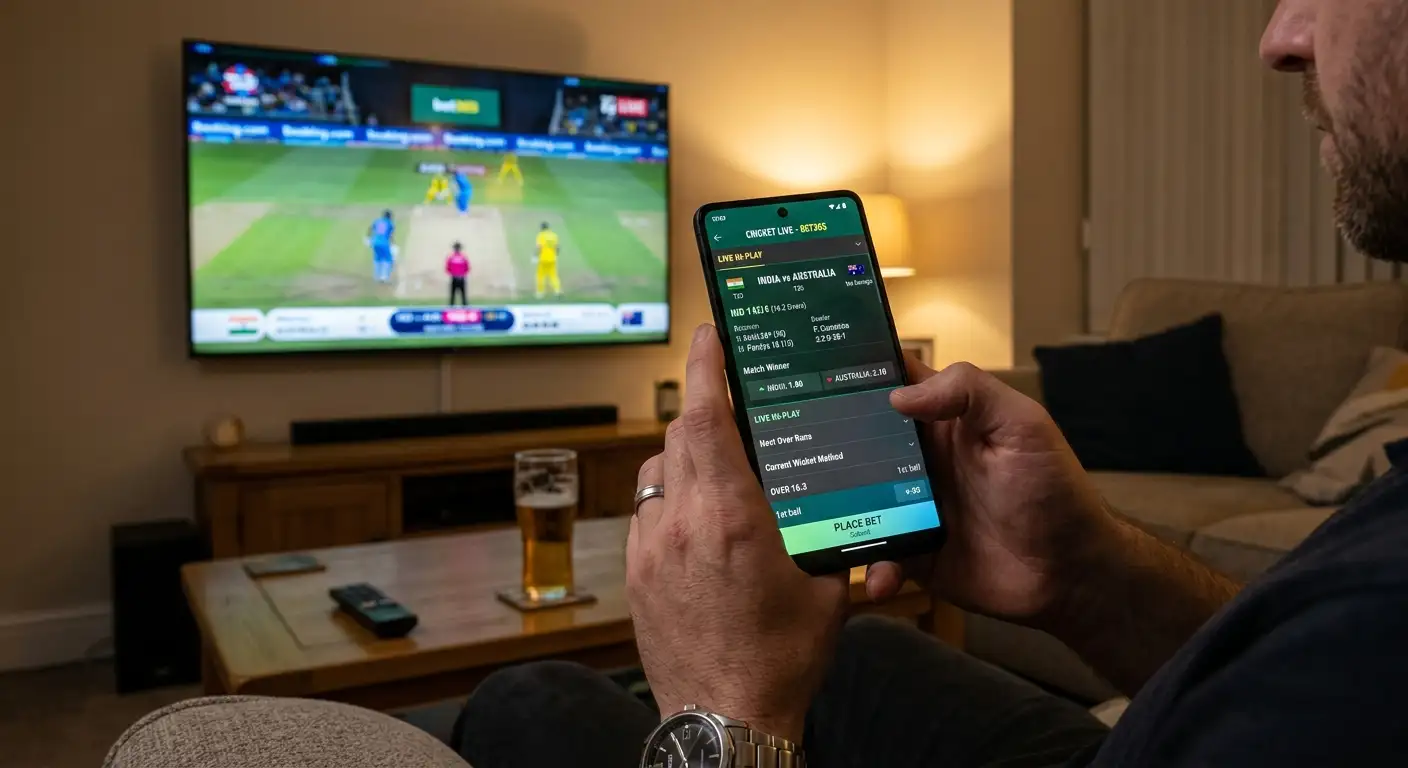
Cash out is the feature most closely associated with in-play betting, worth understanding in principle even though its full mechanics belong elsewhere. In short, it lets you settle a bet before the event finishes, taking a price based on the current situation rather than waiting for the result. It can lock in a profit or cut a loss, but the book prices it in its own favour, so the convenience comes at a cost you should weigh rather than reach for on reflex. You will also meet Best Odds Guaranteed around live betting, one of the few promotions that adds genuine value.
Best Odds Guaranteed, or BOG — a promotion where, if you take an early price and the starting price drifts longer, the book pays you out at the bigger of the two. It improves the value of your bet at no extra stake, which is why it is one of the few offers I actively look for.
In-play rewards preparation and punishes impulse. The bettors who do well live decide their lines before the match and use the live market to execute, not to chase. The mechanics of cash out, ball-by-ball markets, streaming and latency deserve a proper walkthrough, and I have written one in the dedicated guide to in-play cricket betting. If live betting is where you want to live, read it before you next have a match open.
Legality, Licensing and What That Actually Buys You
“Is this even legal?” is the question new bettors ask most, and the answer in the UK is refreshingly clear. Betting on cricket is entirely legal for adults of 18 and over, provided you bet with an operator licensed by the regulator. There are no state-by-state grey zones here as there are in some markets; one national framework, set out under the Gambling Act 2005, governs the lot.
What the licence obliges an operator to do is the part most guides skip. A licensed operator must segregate customer funds to a defined protection level, offer working responsible-gambling tools, verify your age and identity, and submit to the regulator’s audits and enforcement. The badge in the footer is the visible tip of a deep set of legal duties, and those duties are precisely what you are buying when you choose a licensed site over an unlicensed one.
The framework has also grown teeth. Since the Gambling Levy Regulations 2025 took effect on 6 April 2025, every licensed operator pays a statutory levy of between 0.1 and 1.1 percent of their gross gambling yield, with online operators charged at the top of that scale. That is real money flowing into the treatment and prevention of gambling harm, and it marks a shift from a voluntary system operators could quietly underfund to a mandatory one they cannot dodge.
An operator without a UK licence is not a cheaper alternative; it is a site outside every protection described here. No fund segregation you can rely on, no enforced tools, no regulator to complain to if your withdrawal vanishes. The licence is not bureaucracy. It is the entire safety net, and betting outside it means betting without one.

Verifying a licence yourself takes minutes. The regulator maintains a public register, and a genuinely licensed operator displays its licence number, which you can look up directly rather than trusting a logo anyone can copy onto a page.
To confirm a cricket site is legal and licensed:
- Find the operator’s licence number, usually in the footer or terms.
- Look it up on the regulator’s public register rather than trusting the on-page badge.
- Confirm the licensed entity name matches the brand you are betting with.
- Check the site states an 18-plus requirement and offers identity verification at sign-up.
- Walk away if any of these cannot be confirmed, however attractive the odds.
That habit, repeated, is the cheapest insurance in betting. The step-by-step mechanics of reading the register, and what separates a safe site from a risky one, get fuller treatment in the cluster on safe and legal betting I pointed you to earlier. For choosing a cricket site today, the rule is blunt: licensed and verifiable, or not at all.
Integrity: Who Is Watching the Cricket You Bet On
There is a sentence from the head of the ICC’s anti-corruption unit I have never forgotten. Corruptors love captains, Alex Marshall said, revealing that five captains had been approached in a single twelve-month period. Read that and the abstract worry about match-fixing becomes concrete: fixers target the people with the most control over a result.
Integrity matters to you for a selfish reason as much as an ethical one. A bet is only worth placing if the contest is genuine; if a market is being manipulated, you are not taking a calculated risk against the bookmaker but acting as a mark in someone else’s scheme. The scale of the threat is enormous: up to 1.7 trillion dollars is wagered every year on illegal markets controlled by organised crime, an underground economy that dwarfs the regulated one and has every incentive to corrupt results. That is the dark sea the licensed market floats on, and it is why monitoring exists at all.
The reassuring counterweight is how much of cricket, and sport generally, is now watched. Across 12 sports in 94 countries, monitoring flagged 1,116 suspicious matches in 2025, a 1 percent fall on the previous year. Set against the total volume of sport played, more than 99.5 percent of events worldwide were monitored in 2025 with no sign of suspicious activity at all.
The integrity bodies are not winning by ignoring the problem; they are winning by watching almost everything, and Marshall’s point about captains shows where the pressure concentrates.
The markets most exposed to manipulation are the granular ones: session runs, fancy bets and specific in-play events a single corrupt player can influence without obviously throwing a match. This is the flip side of the market depth I praised earlier; the deeper you bet, the more carefully you should weigh whether a market sits in territory fixers find attractive.
The practical upshot is straightforward. Bet through licensed operators, who are obliged to cooperate with integrity bodies and report suspicious patterns, and treat the deepest micro-markets with a clear head about why they exist and who else is interested in them. The full story of how match-fixing works and how monitoring catches it is a serious subject I have explored at length in the supporting articles on integrity. The core idea: a fair contest is the product you are buying, and the licensed framework keeps it honest.
Staying in Control, and Where to Turn When You Are Not
I will be direct, because this section matters most. Betting on cricket should be entertainment you can comfortably afford to lose, and the moment it stops feeling like that, the priority is not your next bet but your wellbeing. Everything else in this guide is about betting better; this part is about betting safely.
The scale of gambling harm in Britain is no longer a quiet concern. Wes Streeting, the Health Secretary, has called it a public health crisis hiding in plain sight, pointing to a 47 percent rise in NHS referrals for gambling disorder between 2022 and 2025. That is not rhetoric; it is a measured increase in people seeking treatment, and it sits behind the entire shift towards mandatory funding and stronger protections this guide has touched on.
The system is responding. NHS clinics treating gambling addiction recorded a 34 percent rise in referrals during 2025, and funding from the statutory levy is set to support at least five new clinics by the middle of 2027. The principle behind it was put plainly by Claire Murdoch of NHS England, who argued that it is only right for a billion-pound industry to step up and support the people suffering from gambling addiction. The money operators pay into the levy is, in part, paying for that treatment network.
If betting has stopped being fun, help is built into every licensed site and available beyond it. You can set deposit limits and reality checks directly with your operator, and you can self-exclude across all UK licensed sites at once through GAMSTOP. For support, advice and treatment, GambleAware and the NHS gambling clinics are there for you and for the people around you. You must be 18 or over to bet. There is no shame in stepping back, and the tools to do it are a tap away.

Gambling harm is rising and being taken seriously: NHS referrals for gambling disorder climbed 47 percent between 2022 and 2025, and the clinic network is expanding on the back of mandatory levy funding. The practical actions are simple: set a deposit limit you can afford, switch on reality checks, and use GAMSTOP if you need a full break. Bet only what you can lose without it mattering, and step away the instant it stops being entertainment.
The deeper guidance, on self-exclusion, deposit limits, the clinic network and the risks facing younger bettors, lives in the supporting responsible-gambling articles across this site. I would rather you read them and never need them than skip them and wish you had. Betting on cricket can be a lifelong source of harmless enjoyment, and keeping it that way is within your control.
Questions UK Cricket Bettors Keep Asking
The questions I am asked most often, answered briefly. Where a topic runs deeper, I have pointed you to the fuller guide elsewhere on the site.
Is cricket betting legal in the UK?
Yes. Betting on cricket is fully legal for anyone aged 18 or over, provided you use an operator licensed under the Gambling Act 2005. Unlike markets where legality varies by region, the UK runs a single national framework, so any properly licensed site is legal anywhere in the country. The only line that matters is licensed versus unlicensed.
How do I check whether a cricket betting site holds a UKGC licence?
Find the operator’s licence number, usually in the footer or terms, and look it up on the regulator’s public register rather than trusting the badge on the page. Confirm the licensed company name matches the brand you are betting with. A logo can be copied onto any website in seconds; a register entry cannot be faked.
What should I look for when choosing a cricket betting site?
Price first, depth second, protection always. Measure the overround on a standard market, since a site at 4 to 5 percent on Tests and ODIs pays you more over time than one at 7 to 8 percent. Check that market depth stays tradeable in-play, confirm the licence and that responsible-gambling tools work, and treat the welcome offer as a tie-breaker, never the headline reason to sign up.
Which cricket tournaments can I bet on in the UK?
Effectively all of them, year-round. The IPL, The Ashes, the ICC World Cup and T20 World Cup, The Hundred, the T20 Blast and the County Championship are all widely available at licensed UK sites, alongside international tours and overseas franchise leagues. The IPL draws the deepest markets, but domestic competitions often offer value precisely because fewer people pay attention to them.
Are cricket free bets and welcome offers worth claiming?
Sometimes, but only if you read the terms before the headline. The wagering requirement, the minimum qualifying odds and whether returns include your stake decide an offer’s real worth far more than the advertised figure. A matched free bet usually returns winnings only, so it is worth less than a cash bet of the same size. Never let an offer push you into bets you would not otherwise place.
How can I bet on cricket responsibly?
Decide what you can comfortably lose, set a deposit limit at or below that figure, and switch on reality checks so long sessions get interrupted. The regulator has also introduced online slot stake limits of 5 pounds for those aged 25 and over and 2 pounds for players aged 18 to 24. If betting stops being fun, self-exclude through GAMSTOP and reach out to GambleAware or the NHS gambling clinics. You must be 18 or over to bet.
Picking Your Site With Your Eyes Open
Strip away the banners and the five-star badges and choosing a cricket betting site comes down to a handful of unglamorous truths. The price you are offered, governed by the overround, decides your returns over a lifetime of bets far more than any welcome offer will. Market depth is worth exactly as much as the slice of it you will use. And the licence behind the brand is not paperwork; it is the entire safety net of fund protection, working tools and regulator enforcement standing behind every bet.
I have given you the framework I use rather than a ranked list, because there is no single best site for everyone. The value bettor, the in-play trader, the tournament specialist and the casual mobile punter all need something different, and the only honest answer is to match your profile to the operator sharpest where you are most exposed.
From here, go where your betting actually lives, and take the same discipline with you: read the price as a probability, confirm the licence by number, and never claim an offer you have not read to the end. Keep the thing in its proper place, too. Cricket betting is at its best as entertainment you can comfortably afford, sharpened by knowing the numbers better than the next punter, so bet with your eyes open and the game stays exactly what it should be.
Written by the editors at Best Cricket Betting Sites.