IPL & Major Cricket Tournament Betting Sites for UK Punters
 Available in US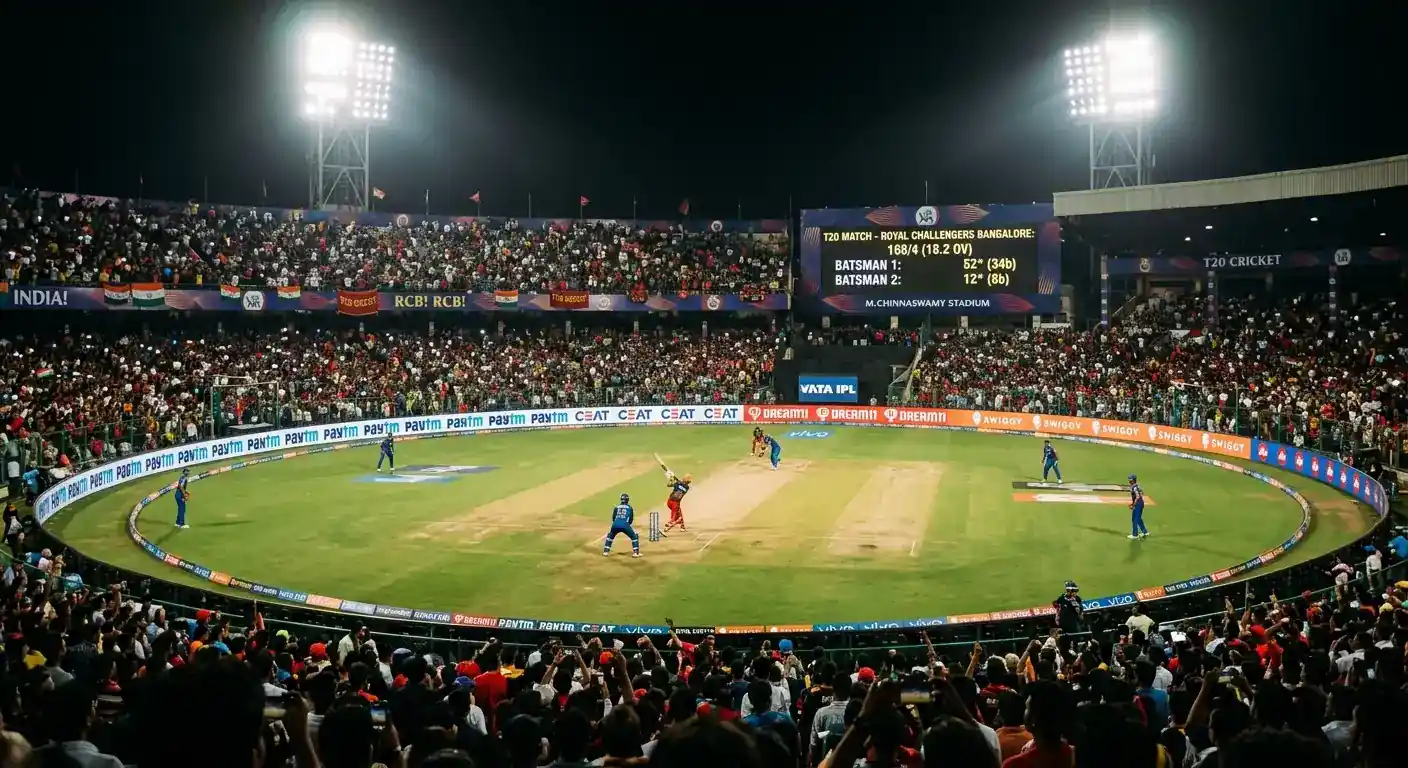
The first time I tried to place an outright on an IPL winner three days before the auction had even settled, the market wasn’t there. Not at one site, not at three. I spent the better part of an evening flicking between operators only to learn the hard way that tournament betting isn’t a single thing you switch on — it’s a calendar, and the bookmakers move to it like the rest of us move to a kettle boiling. Eight years of reviewing UKGC-licensed sites has taught me that the difference between a frustrating tournament season and a smooth one comes down almost entirely to which operator you walked into the season with.
That matters more than it sounds. The cricket betting market is worth around $14.45 billion globally as of 2024, and it isn’t spread evenly across the year — it spikes hard around a handful of marquee tournaments, with the IPL pulling in over 400 million viewers and individual England-India fixtures attracting wagering volumes that have touched $200 million a match. When that much money concentrates on a few weeks of the year, the sites that have invested in tournament infrastructure pull away from the ones that treat cricket as an afterthought. This guide is about spotting which is which, format by format, so you back the right horse before the gates open rather than scrambling once they have.
Table of Contents
Why the IPL Is the Centre of Gravity for Tournament Betting
Ask any UK punter where they cut their teeth on cricket betting and a surprising number will say the IPL, not the international game. It makes sense once you see the numbers. The IPL is the single largest concentration of cricket wagering on the planet, and the operators know it — they build their seasonal product around it the way supermarkets build Christmas around the last week of December.
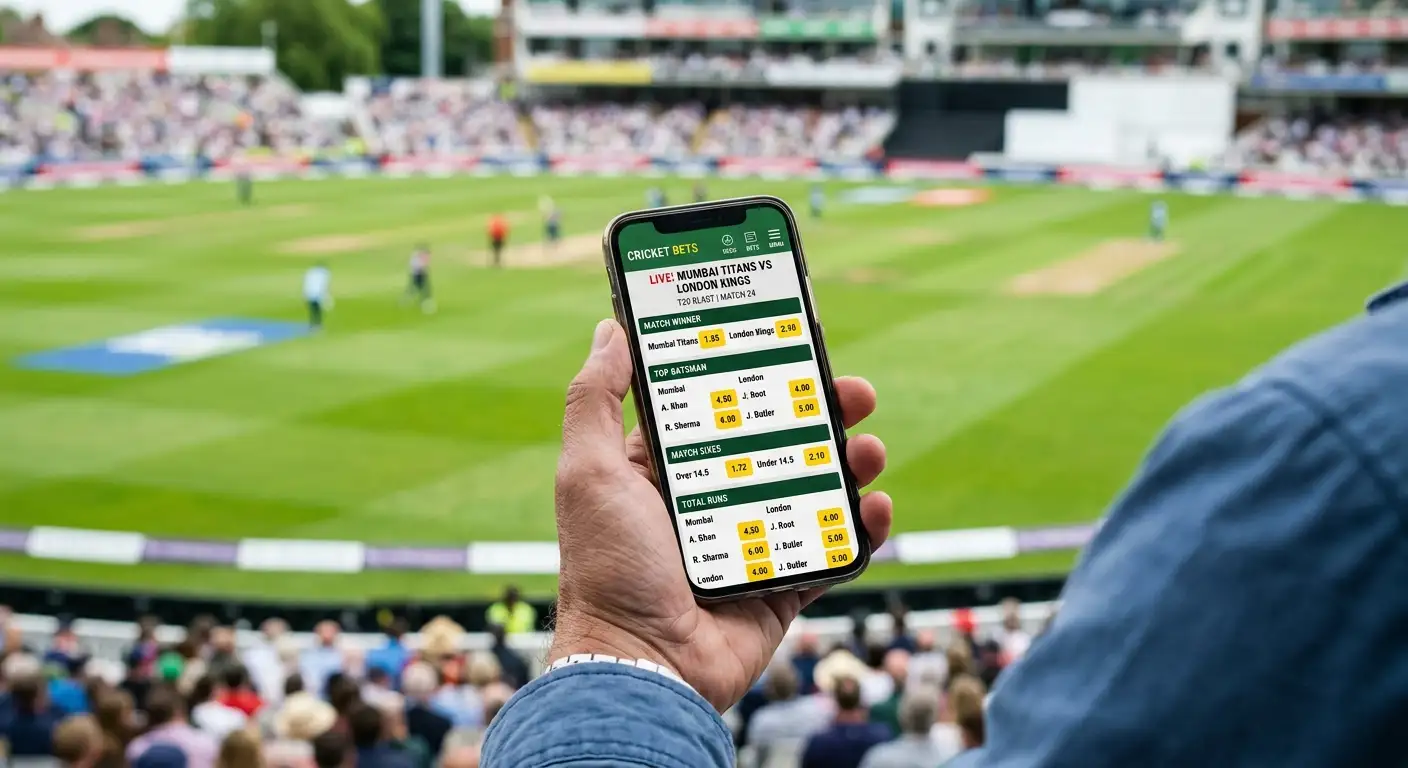
What this means in practice is that the IPL is where you see a bookmaker’s full hand. During the tournament, the better UKGC-licensed sites push out specials you simply won’t find on a routine bilateral series: orange cap and purple cap outrights running the whole season, franchise-to-win-the-trophy markets that update after every game, player-of-the-tournament books, and a depth of in-play that can run to dozens of live markets per fixture. With player-specific and live markets now accounting for over 35% of all cricket bets worldwide, and the match-winner market alone making up roughly 40% of volume, the IPL is where that appetite gets fed most aggressively.
The practical upshot for choosing a site is this: judge a bookmaker by how it handles the IPL and you’ve effectively stress-tested it for the whole year. If an operator gives you tight orange-cap pricing, a clean cash-out flow during a tense super over, and outright markets that stay live deep into the season, it will handle The Ashes and the World Cup with room to spare. I’ve never seen a site that nails the IPL and then falls apart on a Test series. The reverse, though, happens constantly.
There’s a texture to IPL betting that you only feel once you’ve sat through a full season on one operator. The pricing tightens noticeably as a tournament progresses, because the bookmakers learn the form lines the same as we do, and the loose early-season prices on a newly promoted player or an untested overseas signing are gone by the back end of the group stage. I’ve made more from the first fortnight of an IPL than from the playoffs precisely because the market hasn’t settled yet. A site that posts player markets early in the tournament, before the form is established, is handing you a window that closes fast.
One more thing worth saying plainly, because the marketing rarely will. The IPL’s scale is also why it attracts the wrong kind of attention. The volume that makes the markets deep and the prices sharp is the same volume that draws integrity risk, which is why the better operators tie their IPL coverage to monitored data feeds rather than scraping a scoreboard. You don’t need to think about that on every bet, but it’s part of why a regulated UK site is worth more than an offshore one offering a slightly fatter price. The fat price offshore is often fat for a reason, and the reason rarely works in your favour.
The Ashes: Where Outright Markets Reward the Early Mover
I have a personal rule for The Ashes that has saved me more money than any in-play instinct ever has: I check the series-winner outright the moment squads are announced, not the morning of the first Test. The reason is simple — Ashes outrights are the most heavily traded long-form market in the UK calendar, and the price you get on day one of availability is almost never the price you get a fortnight later once the public has piled in.
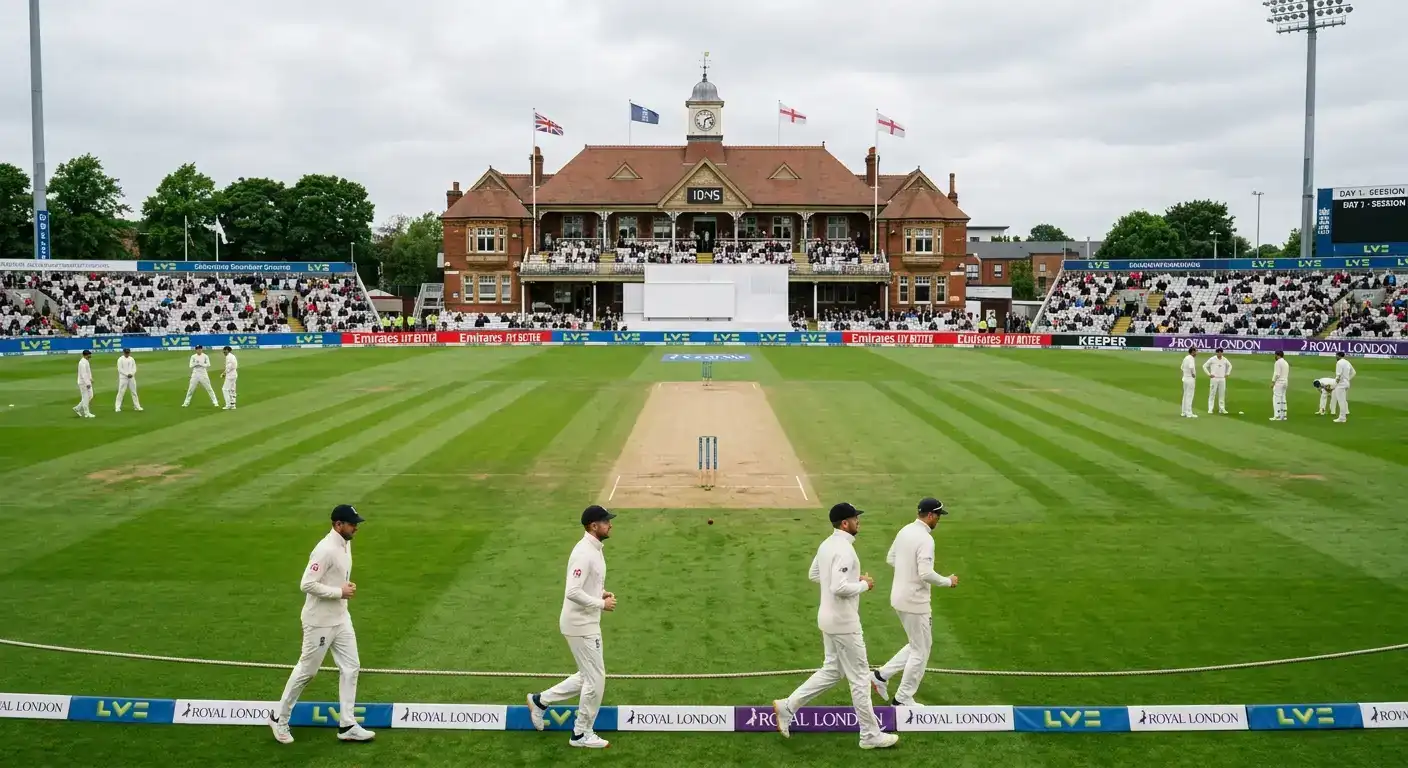
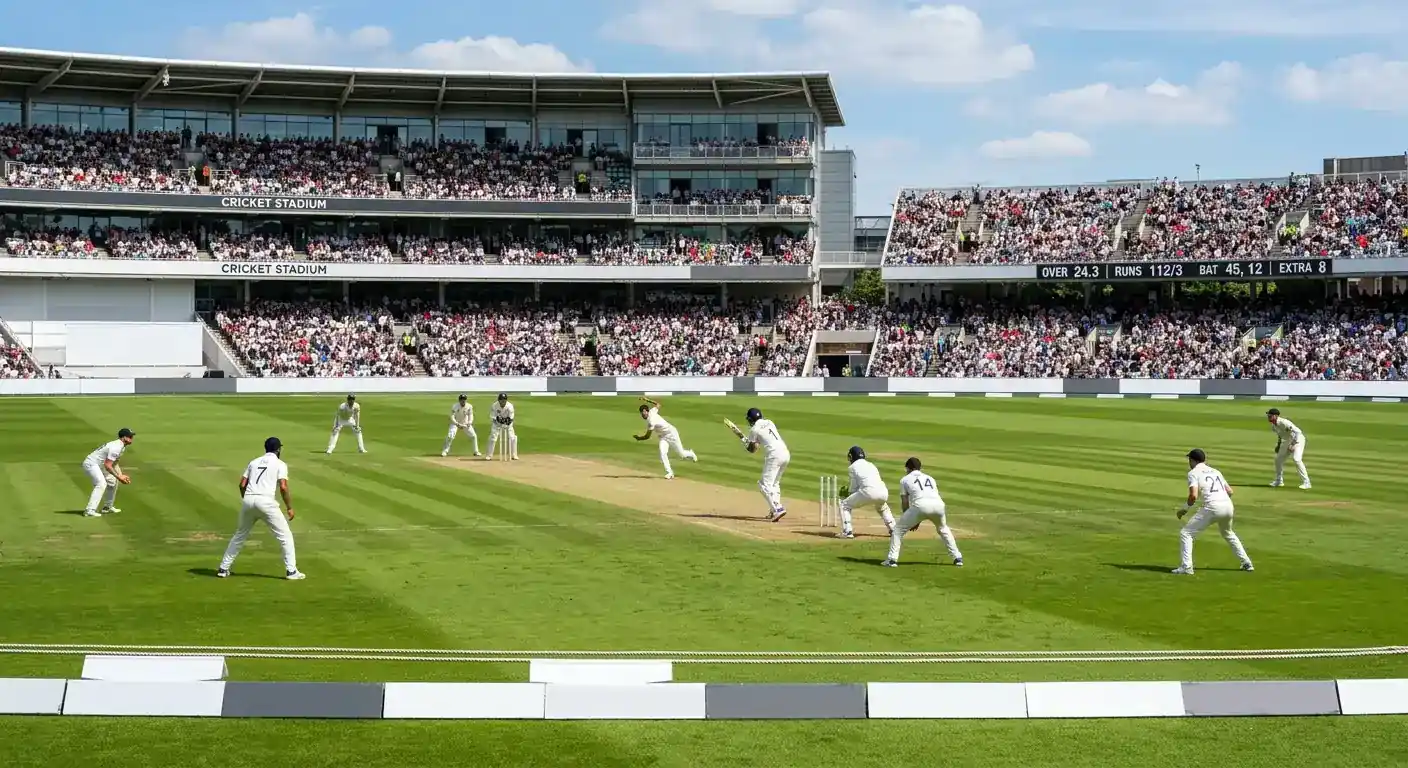
The Ashes is a different animal from the IPL entirely. Where the IPL rewards reaction speed and a deep in-play product, a five-Test series rewards patience and a bookmaker that posts its markets early and keeps them rich throughout. The markets I care about for an Ashes summer are the series correct score — backing a 3-1 or 3-2 scoreline rather than a binary winner — top series runscorer and wicket-taker, and the drawn-series option that casual punters forget exists right up until rain rolls into Old Trafford.
Here’s the part that trips people up. Not every site treats a draw the same way across the series-winner and the individual-match markets, and the settlement rules on a rain-ruined Test can swing a result. Before I commit to a site for an Ashes summer, I read the rules on abandoned and drawn matches the way you’d read the small print on a tenancy agreement, because in this format they actually fire. A bookmaker that buries those rules or makes them hard to find is telling you something about how it’ll behave when a result is contested.
For a long series, then, depth and clarity beat speed. You want an operator that lists every Test individually with its own match markets, keeps the series outright moving, and is transparent about how draws settle. Get that right and the in-play almost looks after itself.
There’s a rhythm to betting an Ashes that’s worth internalising. The series outright is a slow-burn position you set early and largely leave alone. The individual-match markets are where you stay active, reading the pitch reports, the overnight weather, and the toss — which in Test cricket matters far more than the casual punter credits. A green seaming surface at Headingley and a flat road at The Oval are different betting propositions entirely, and the site that gives you the deepest match-by-match board lets you express that read properly. I’d rather have a site with rich single-Test markets and a slightly shorter outright price than the reverse, because across a five-Test summer it’s the match markets I’ll touch most.
ICC Events and the T20 World Cup: Breadth Over Depth
The first World Cup I covered properly, I made the mistake of assuming the markets would mirror a bilateral series — just more of them. They don’t. ICC events are sprawling, multi-team affairs where the challenge isn’t the depth of any single fixture but the breadth across a tournament that can feature teams most casual punters couldn’t place on a map.
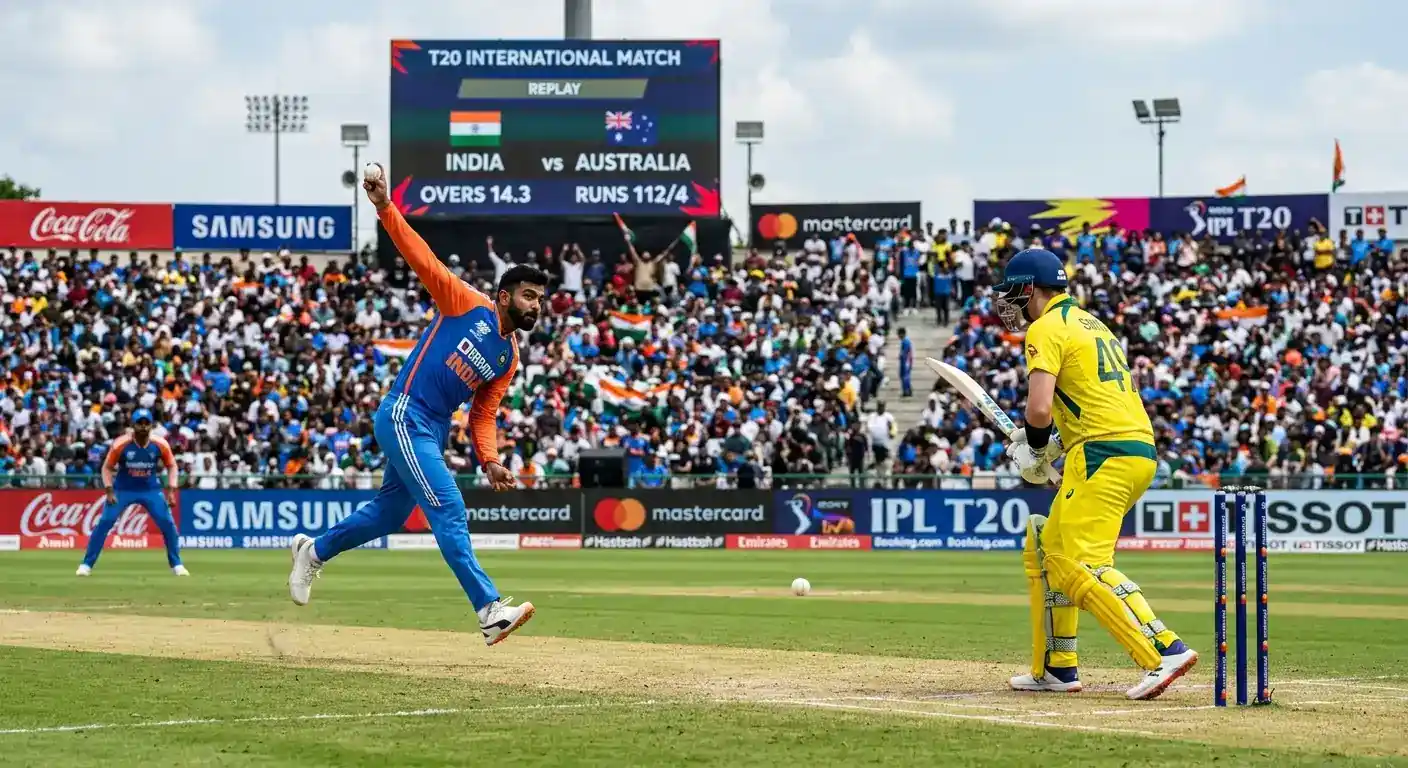
This is where the structure of international cricket starts to matter to your bottom line. The ICC has 12 full members and 96 associate members, and since 2018 every men’s T20 international has been classified as a full international. That single rule change quietly exploded the number of fixtures carrying full betting markets — and pulled in plenty of matches where the integrity coverage is thinner than it is on a marquee England fixture. As Dave Richardson, the ICC’s chief executive, put it when the corruption threat was spreading beyond the headline nations, the focus had shifted onto associate members and women’s teams, so the work now is making sure players across all the teams are very well educated. That’s the regulator’s polite way of saying the edges of the tournament carry more risk than the centre.
What you actually want from a site during a World Cup is twofold. First, coverage that reaches the group stage and the associate nations, not just the quarter-finals onward — because that’s where the value hides before the public catches on. Second, tournament-long outrights that include the realistic outsiders, not a stripped-down book of four favourites. A site that only prices the top seeds is leaving the most interesting part of the tournament off the table.
If the IPL is a test of an operator’s in-play muscle and The Ashes a test of its outright discipline, an ICC event is a test of its range. The good ones make a 36-match group stage feel navigable. The lazy ones make you hunt.
The Hundred and the Domestic Game
The Hundred split opinion among purists, but it did something useful for punters: it gave the English summer a second, faster festival to bet on, sitting alongside the County Championship and the T20 Blast like a pop concert next to a cathedral evensong. The two domestic worlds reward completely different things from a betting site, and most operators are noticeably better at one than the other.
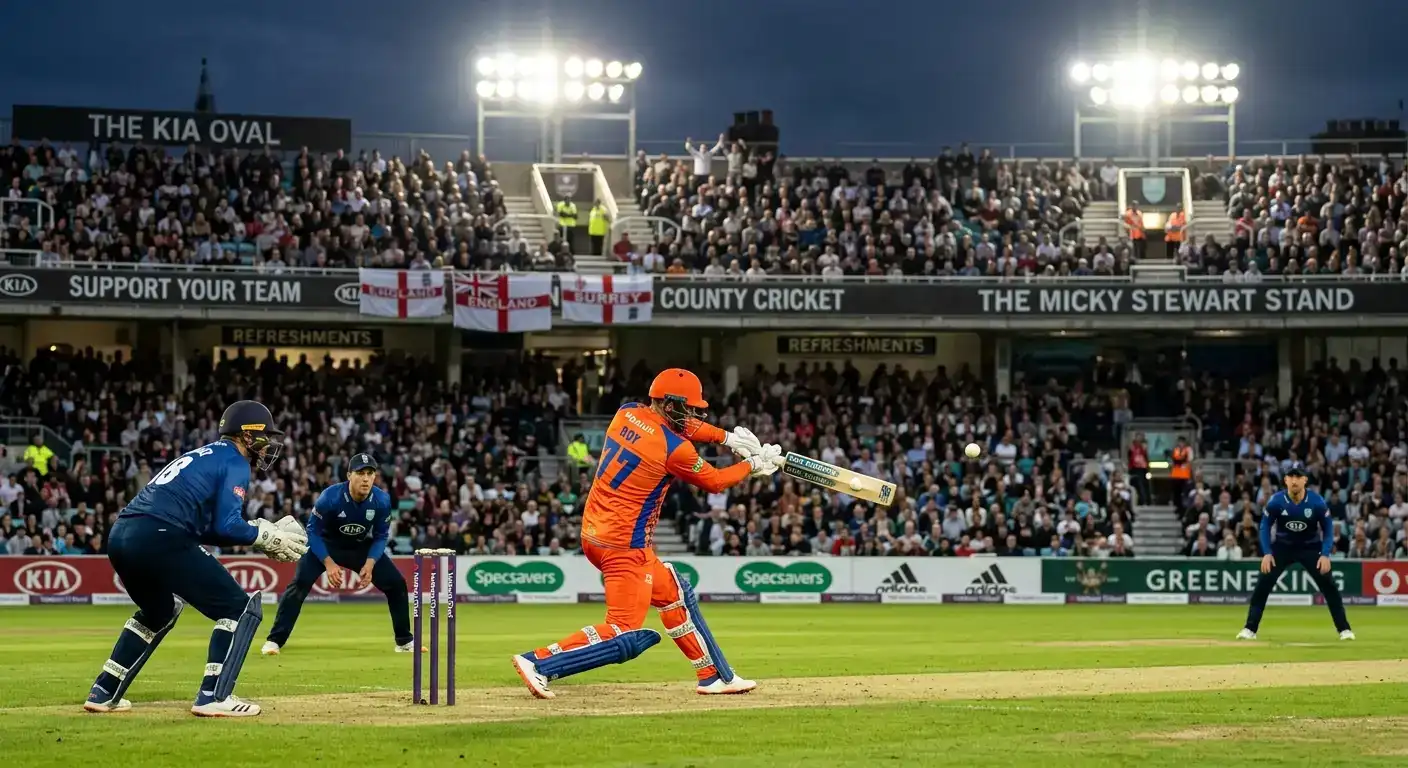
The Hundred behaves like a compressed franchise tournament. It’s short, it’s televised heavily, and it carries the same code of conduct on gambling sponsorship that now governs the professional county clubs — the ECB introduced that code at the start of the 2025 season specifically to keep the commercial relationship between cricket and betting on a responsible footing. For betting purposes it means deep in-play, plenty of player props, and outrights that turn over quickly because the competition is so condensed.
County cricket is the opposite. The Championship is long, slow-burning and gloriously unfashionable, which means the markets are thinner and the sites that bother to price the full season are a self-selecting group of serious cricket operators. If a bookmaker prices County Championship division winners and individual match markets across the round-by-round schedule, that’s a strong signal it takes the sport seriously rather than just chasing IPL traffic. The reward for finding that site is markets the wider public largely ignores — which, for a patient punter, is exactly where value lives. I’ve found some of my best-priced positions of the year in a wet April Championship round that the rest of the market couldn’t be bothered to look at.
Outright versus Match Markets: Picking Your Battleground
Every tournament gives you the same fundamental choice, and getting it wrong is the most common mistake I see new punters make. Do you bet the tournament — an outright or futures position that lives or dies over weeks — or do you bet the match in front of you?
Outright and futures markets are positions you take on a long-run result: series winner, tournament winner, top runscorer across an entire competition. They tie up your stake for the duration and they reward research over reaction. Match markets — match winner, total runs, top batsman in a single fixture — settle the same day and reward reading the conditions in front of you. The reason this choice matters at the site-selection stage is that operators are rarely equally good at both. With match-winner markets making up around 40% of global cricket betting volume and player and live markets over 35%, most sites pour their pricing effort into the single-match products and treat outrights as a loss-leader.
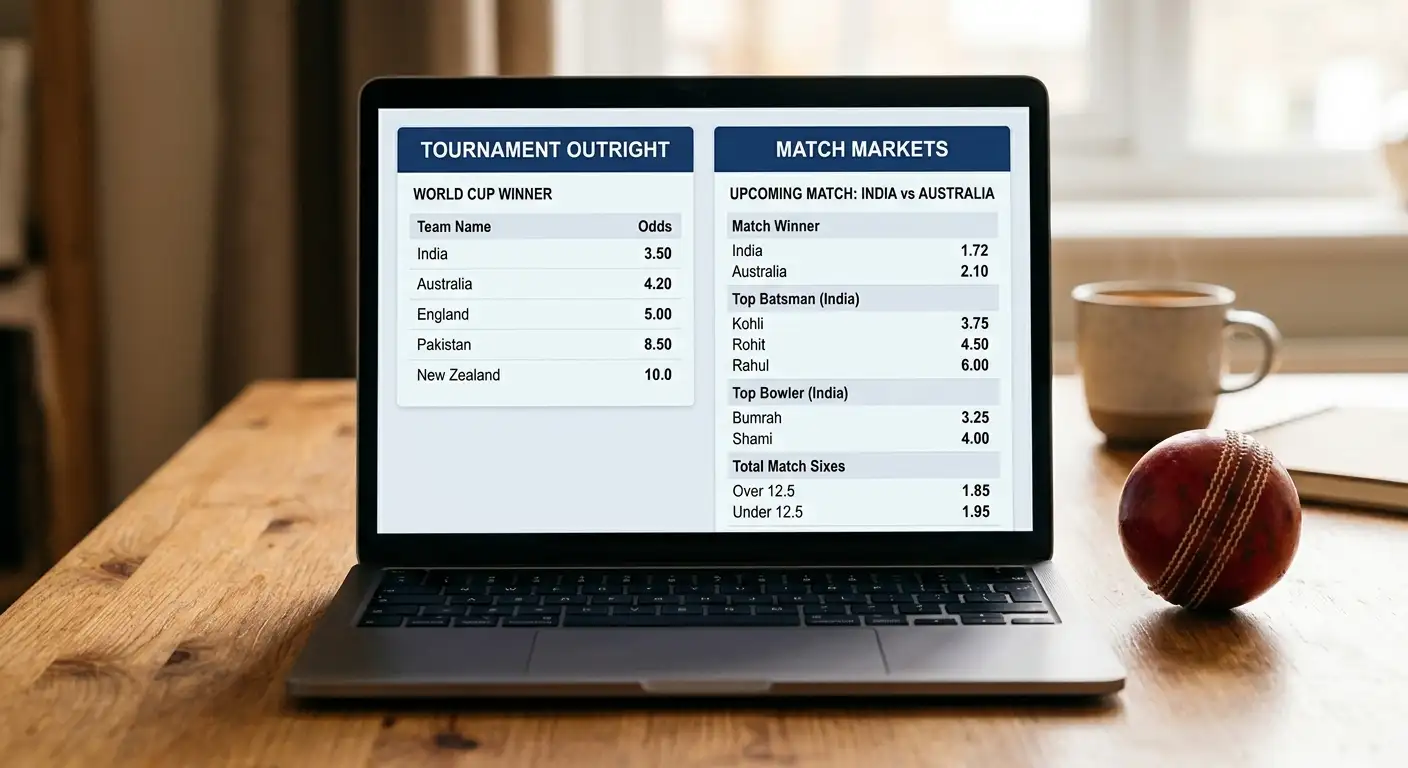
My own approach across a tournament is to take outright positions early, when the price is loose and the field is wide, then switch to match markets once the competition is live and I can read form and conditions. That means I genuinely need a site that does both well — a deep outright book at the start and sharp match pricing throughout. The sites that can’t do both force you to split your bankroll across two operators, which is a hassle and a leak. If you only ever bet single matches, the calculus is different and the depth of the live product matters far more than the outright board. That same depth is what makes live in-play markets behave so differently across UK sites once a tournament is actually running.
Choosing a Site by the Tournament You Actually Bet
I’ll be blunt about something the listicles won’t tell you: there is no single best tournament betting site, because the tournaments demand different things. The honest question isn’t “which site is best” but “which site is best for the cricket I actually bet on.”
The clearest way I can frame it is by the trait each format rewards. If you live for the IPL and franchise cricket, prioritise in-play depth and the number of live markets per fixture — the operators with the widest cricket books carry well over a hundred markets on a single match and more than eighty on an IPL or T20 fixture, and that breadth is the whole point of franchise betting. If The Ashes is your summer, prioritise early outright availability and crystal-clear settlement rules on draws. If you follow ICC events, prioritise tournament breadth down to the associate nations. And if you’re a county diehard, prioritise the rare sites that price the long domestic season at all.
Where this all converges is on the things every good UK site must do regardless of format: hold a current UKGC licence, price cricket tightly rather than treating it as a minor sport, and offer the in-play product you’ll lean on most. Match those non-negotiables first, then layer your format priority on top. That ordering — licence and pricing first, format-fit second — is the one that keeps you out of trouble. I learned it by getting it backwards more than once.
A Working Calendar for the 2026 Cricket Year
The single most useful habit I’ve built in eight years is treating the cricket calendar as my betting diary rather than the bookmaker’s promo emails. Promotions tell you what an operator wants to sell this week. The calendar tells you what’s actually worth your attention, and it lets you get your outright positions down before the rest of the market wakes up.
The shape of a cricket year is reasonably predictable. The early months belong to franchise and international white-ball cricket and the back end of southern-hemisphere seasons. The IPL dominates spring and is the year’s biggest single window for in-play and player markets. The English summer brings the international fixtures, The Hundred and the domestic competitions stacked on top of each other, which is the densest stretch of the year for a UK punter and the one where having a site that covers everything pays off most. ICC global events land on a rolling multi-year cycle and reshape the back half of whichever year they fall in.

My practical routine looks like this. At the start of each major window I open the outright markets for that tournament and note where the early prices sit, even on positions I don’t intend to back yet, because the drift over the following fortnight tells me where the public money is going. I keep a single site as my primary because consistency of settlement and a familiar in-play interface are worth more under pressure than chasing a marginally better price across five tabs. And I never let a welcome promotion pull me onto a site I wouldn’t otherwise use for the season — the offer lapses in a week, the season lasts months.
The other discipline the calendar enforces is patience around the dead weeks. There are stretches of the cricket year where the only fixtures on offer are low-profile bilateral games or associate-level tournaments, and these are precisely the windows where I tighten up rather than reach for action. The markets are thinner, the public attention is lower, and the integrity coverage is patchier — none of which is a recipe for value. The calendar tells me when to lean in and, just as usefully, when to sit on my hands until the next big window opens.
Build the year around the calendar and the site choice almost makes itself. You stop asking “where’s the best price right now” and start asking “which operator will still be giving me clean markets in week eight of the season.” That second question is the one that matters.
The operators with the deepest cricket books run well over a hundred markets on a single high-profile fixture and more than eighty on IPL and T20 matches, covering match winner, totals, player props and ball-by-ball in-play. Rather than chasing a named site, judge the breadth yourself during the tournament — the IPL is where every operator shows its full hand, so the one with the widest live board there will serve you for the rest of the year. Series-winner and individual-award outrights typically appear once squads are confirmed, well ahead of the first Test, and the early price is rarely the price you get later once public money arrives. Back your outright positions when the market first opens rather than on the morning of day one, and always read the settlement rules for drawn and abandoned Tests before committing, because in a five-match series those rules genuinely fire. Some operators cover both, but many treat The Hundred as a heavily marketed priority while pricing the County Championship thinly or not at all. If you want the full domestic season under one roof, check before the season that the site actually lists County Championship division winners and round-by-round match markets — a site that prices the long domestic format is signalling it takes cricket seriously rather than just chasing franchise traffic.Which UK sites offer the most IPL betting markets?
When do bookmakers release outright odds for The Ashes?
Can I bet on The Hundred and the County Championship at the same site?
Written by the editors at Best Cricket Betting Sites.