Safe & Legal Cricket Betting in the UK: Licensing, Protection & Player Safeguards
 Available in US
People are often surprised when I tell them that the most important number on a cricket betting site isn’t an odds price or a bonus figure — it’s the licence number, usually tucked away in small grey type at the very bottom of the page. I check it before I check anything else, every single time, and I’ve turned away from sites with prices I liked because that number was missing or wouldn’t verify. After eight years in this, I’ve come to see the licence as the thing that turns gambling from a private risk into a protected one.
The UK gambling market is vast — the country generated around £6.9 billion in online gambling gross gaming yield across a recent twelve-month period — and the framework that governs it is one of the most developed in the world. That framework is the whole reason a UK punter can bet on cricket with protections that simply don’t exist on an offshore site offering a fatter price. This guide is about what those protections actually are: what the law says, what a licence buys you, how your money is safeguarded, what tools exist when betting stops being fun, and how to spot the unlicensed sites that offer none of it. It’s the least glamorous corner of cricket betting and, I’d argue, the most important.
Is Cricket Betting Even Legal in the UK?
Let me settle the question that brings most people here in one breath: yes, betting on cricket is entirely legal in the UK for anyone aged 18 or over, provided you bet with a properly licensed operator. There’s no grey area, no state-by-state patchwork, no quiet illegality. It’s a regulated, taxed, mainstream activity.
The foundation is the Gambling Act 2005, which established a single national framework and the regulator that enforces it, the UK Gambling Commission. This is a genuinely important point of difference for anyone who’s read American betting coverage and come away confused: the UK doesn’t legalise gambling differently in different regions. One federal regulator, one set of rules, applying everywhere. Any operator that wants to take a bet from a UK resident must hold a UKGC licence, and that licence comes with obligations that have only tightened in recent years. The Gambling Levy Regulations 2025, which took effect on 6 April 2025, now require every licensee to pay between 0.1 and 1.1% of their gross gambling yield toward tackling gambling harm, with online operators charged at the top of that scale. The regulated market isn’t a free-for-all that happens to be legal — it’s an industry that pays, by law, toward cleaning up its own consequences.

So the legality question has a simple answer with a single condition attached: legal, yes, if the site is licensed. Everything else in this guide flows from that condition, because the licence is what converts “legal” into “safe.”
It’s worth being precise about who the framework covers, because the line trips people up. The licence requirement attaches to the operator, not to you. As a punter you’re not breaking any law by placing a bet — the legal obligation sits entirely with the company taking it, which must hold a UKGC licence to serve you at all. That’s why an unlicensed offshore site isn’t your legal problem so much as your practical one: you won’t be prosecuted for betting there, but you also won’t have a single one of the protections a licensed operator is legally bound to provide. The law’s whole design is to make the licensed route so much safer than the unlicensed one that no sensible punter would choose otherwise, and on that measure it largely succeeds.
What a UKGC Licence Actually Buys You
When I tell people a licence matters, the natural follow-up is “matters how?” — and the honest answer is that the licence is a bundle of protections most punters never have to think about precisely because they’re working in the background. Let me pull them into the light.
A UKGC licence obliges an operator to do a long list of things that protect you. It must segregate customer funds to a defined standard, so your balance isn’t simply mixed into the company’s operating cash. It must offer the responsible-gambling tools the regulator mandates — deposit limits, time-outs, self-exclusion, reality checks. It must verify your age and identity to keep minors out and to meet anti-money-laundering rules. It must advertise honestly and price its bonuses within the rules. And it must contribute to the system that treats gambling harm. The scale of the licensed sector is substantial in its own right: the UK has 8,148 licensed gambling premises, including 5,669 betting shops, sitting alongside the online operators — a regulated estate, not a fringe.
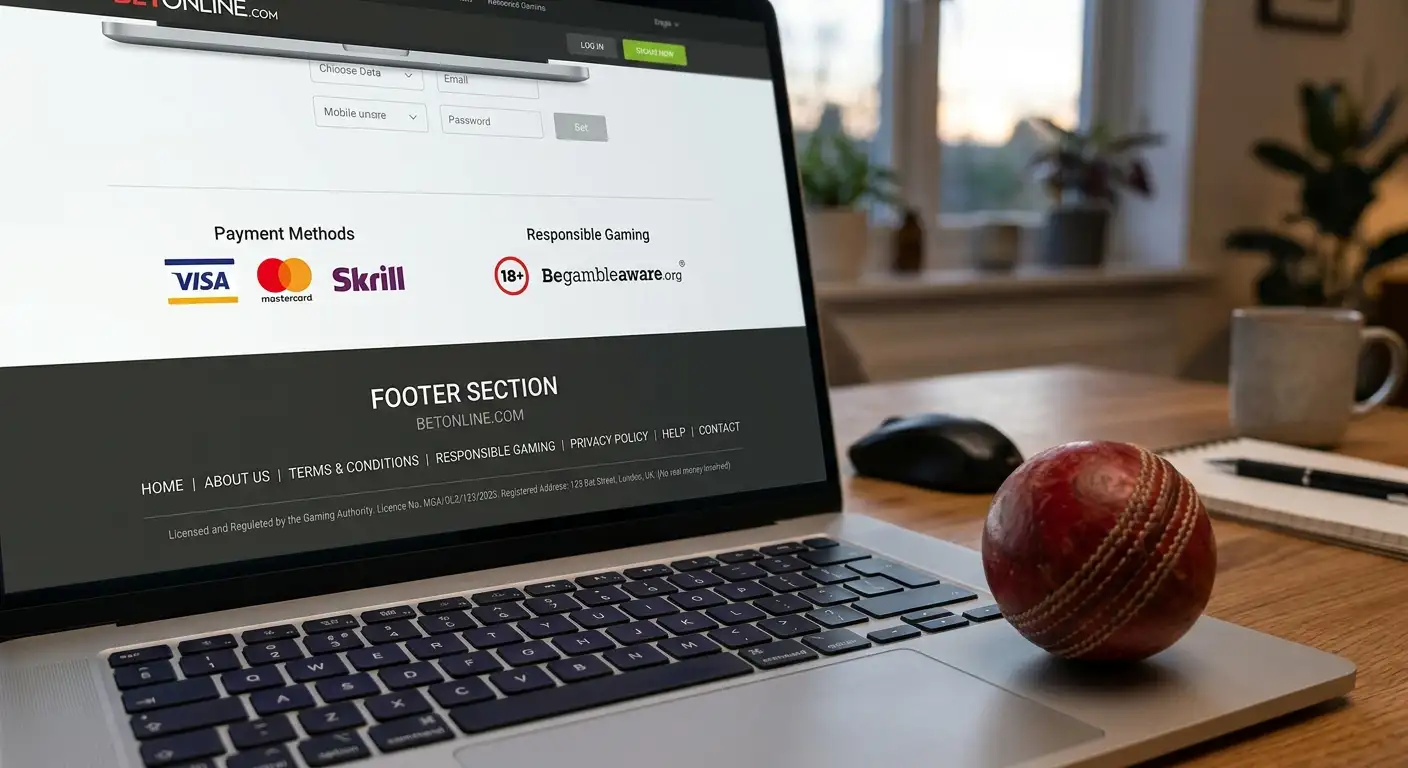
The contrast with an unlicensed site is total. An operator outside the UKGC’s reach owes you none of this. Your funds may not be segregated, the responsible-gambling tools may be absent or cosmetic, and if a dispute arises you have no UK regulator to appeal to. Every item on that list of obligations is a protection that simply evaporates the moment you step outside the licensed market, which is why I treat the presence of a licence as a precondition rather than a preference. To verify that a site holds a genuine licence, checking the operator on the public register takes a couple of minutes and is the single most worthwhile habit a UK punter can build.
One obligation worth singling out, because it’s invisible until you need it, is dispute resolution. A UKGC operator must give you access to an independent alternative dispute resolution service if you and the site can’t agree — over a contested settlement, a withheld withdrawal, a misapplied bonus term. That’s a genuine, enforceable route to a third party with teeth, not a customer-service email into the void. I’ve leaned on it exactly once in eight years, and once was enough to convince me of its worth. On an unlicensed site there’s no equivalent; the operator is judge, jury and cashier all at once, and if it decides your winning bet was somehow void, that’s the end of the conversation. The licence isn’t just a list of things the operator must do for you — it’s the thing that gives you somewhere to go when it doesn’t.
The Statutory Levy and Where the Money Goes
For years, the funding that paid for gambling-harm treatment in this country relied on the industry chipping in voluntarily, and the amounts swung wildly from year to year depending on goodwill and public pressure. That changed, and the change tells you a great deal about the direction UK gambling regulation is heading.
The statutory levy replaced the old voluntary system with a legal obligation, and the difference in scale was immediate. In its first full year the levy raised almost £120 million — roughly double the peak of what the voluntary contributions had ever managed. Half of that money is directed to the NHS in England, and its equivalents in Scotland and Wales, specifically for treating gambling disorders. The rest funds research and prevention. Zoë Osmond, the chief executive of the charity GambleAware, described the levy as transformational for planning services, making the point that the old voluntary system’s year-to-year unpredictability had made multi-year treatment programmes impossible to plan. A reliable, legally mandated stream of funding changes what the support system can actually build.

Why should a punter care where the levy money goes? Because it’s the clearest evidence that betting in the regulated UK market means betting in a system designed to catch you if betting goes wrong. Part of the price built into every bet you place at a licensed site flows, by law, into the treatment and research that exists for the small proportion of people for whom gambling becomes harmful. That’s not true of an offshore site. It’s another quiet way the regulated market earns the trust the unlicensed one can’t.
The shift from voluntary to statutory funding also tells you something about how seriously the state now takes gambling harm, and the political language has hardened to match. When the levy was debated in Parliament, the case made was that this billion-pound industry should pay its fair share toward treatment, and that key decisions on research, prevention and treatment belong with statutory bodies rather than the industry’s own goodwill. Strip away the politics and the practical effect is simple: the money is now reliable, independent of the operators’ mood, and directed by public-health bodies rather than marketing departments. For a punter, that means the safety net beneath the regulated market is being built on solid foundations for the first time, which is exactly the kind of unglamorous structural fact that should make a UK licence feel reassuring rather than restrictive.
The Tools Built In to Protect You
Every licensed UK site you bet with has a set of safety tools built directly into your account, and the uncomfortable truth is that most punters never open them until they wish they had. I’d urge you to know they’re there before you need them, the way you know where the fire exits are before there’s smoke.
The core tools are straightforward and required by the regulator. Deposit limits let you cap how much you can pay in over a day, week or month, and crucially a reduction takes effect quickly while an increase is deliberately delayed, so a heated moment can’t undo a considered decision. Reality checks pop up at intervals you set, pulling you out of the flow to show how long you’ve been betting and how much you’ve staked. Time-outs let you lock yourself out for a short cooling-off period. And self-exclusion lets you shut your account for a sustained period when you need a real break. The regulator has been tightening the wider framework too, including new stake limits on online slots — capped at £5 for those aged 25 and over and £2 for players aged 18 to 24 — a reminder that the rules increasingly recognise that younger adults need additional protection.
The honest framing is this: these tools work, but only if you use them before you feel you need them. Setting a deposit limit when you open an account is an act of foresight that costs nothing and removes a decision you’d otherwise have to make in a worse frame of mind later. I set mine years ago and have never regretted the ceiling it quietly imposes. The whole point of a built-in limit is that it’s there on the day you’d rather it weren’t.
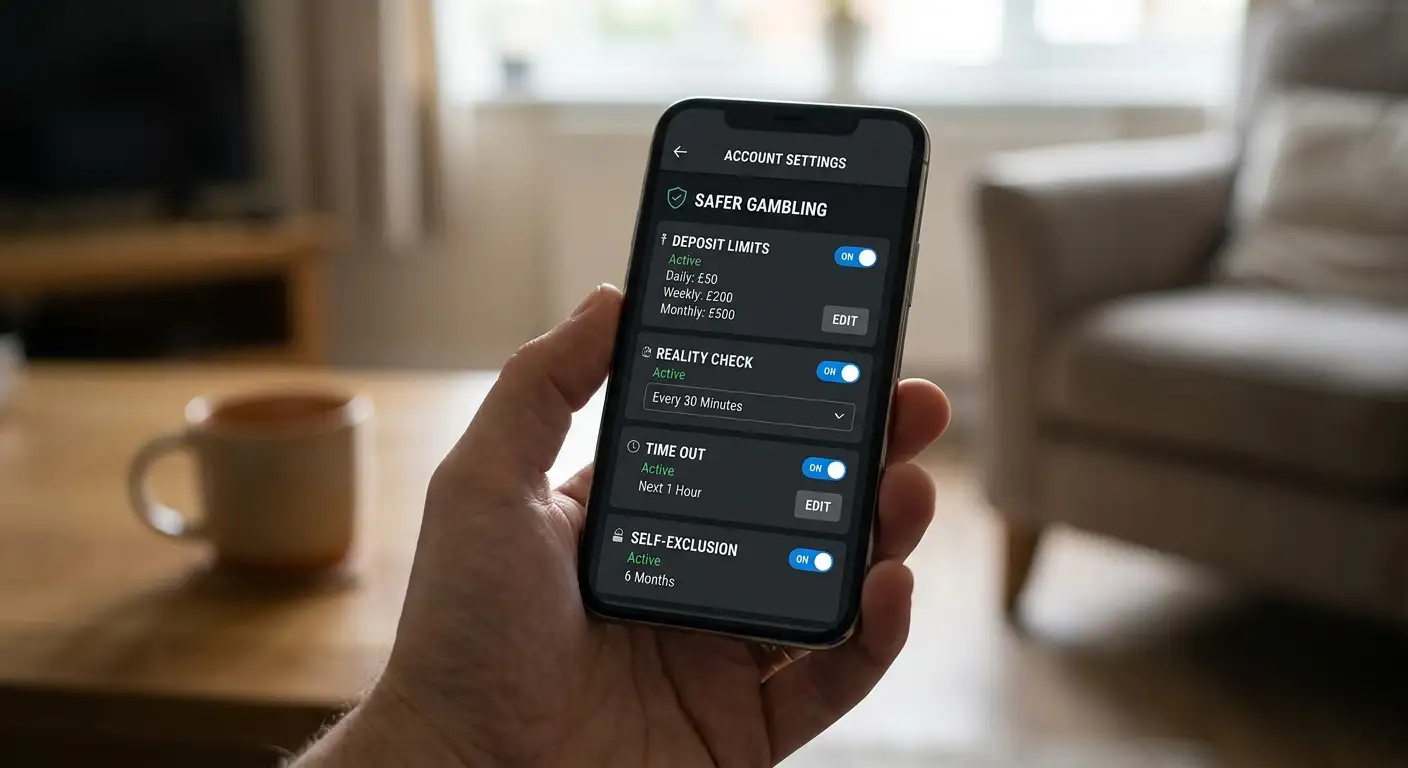
There’s evidence these tools do real work when people engage with them. Pilot programmes run by GambleAware across 2024 and 2025 found a 31% reduction in high-risk betting sessions among participants — a meaningful drop driven largely by exactly the kind of friction these account controls introduce. That’s the mechanism in a nutshell: a reality check that interrupts a long session, or a deposit cap that forces a pause, breaks the autopilot that high-risk betting runs on. The tools aren’t a cure and they don’t pretend to be, but they change the default from “keep going” to “stop and think,” and for a lot of people that single change is enough. Setting them up properly takes a few minutes and pays back many times over.
When Betting Stops Being Fun: Where to Turn
This is the section I most wish more punters read while things are going well, because gambling harm rarely announces itself — it creeps. The UK has built a genuine support network for exactly this, and it has grown markedly in the last few years.
The NHS network of specialist gambling clinics has expanded from 15 locations to 22, and the funding from the statutory levy is set to support at least five more new clinics by the middle of 2027. The demand is real and rising: NHS gambling-addiction clinics recorded a 34% increase in referrals in a single recent year, and referrals for treatment rose by 47% between 2022 and 2025. Wes Streeting, the health secretary, has described gambling harm as a public health crisis hiding in plain sight, pointing to exactly that surge in NHS referrals. Those numbers can read as alarming, but there’s another way to see them: a system that’s finding and treating more people than ever before is a system that’s working harder, not failing.

If betting has stopped feeling like a choice — if you’re chasing losses, betting more than you meant to, or feeling anxious about it — support exists and reaching for it is a sign of strength, not weakness. GAMSTOP offers free self-exclusion across all UKGC-licensed sites at once, the NHS clinics provide specialist treatment, and GambleAware funds confidential advice. Registering with a scheme like GAMSTOP before you feel you need it works the same way as the account tools: it removes a decision you’d otherwise have to make in a worse frame of mind. None of this is failure. The entire framework — the levy, the clinics, the built-in tools — exists precisely because gambling can harm, and using it is exactly what it’s there for.
Spotting the Sites That Offer None of This
After all the protection the regulated market provides, the danger is obvious: sites that sit outside it entirely and want your money anyway. Recognising them is a skill worth having, because the unlicensed operators have become slicker at looking legitimate.
The illegal market is enormous — as much as $1.7 trillion is wagered annually on illegal markets controlled by organised crime worldwide — and a slice of that targets UK punters with sites designed to pass at a glance. The tells are consistent once you know them. There’s no UKGC licence number in the footer, or one that doesn’t verify on the public register. The bonuses are implausibly generous, because there are no rules forcing honest terms. There’s no working self-exclusion, no deposit limits that actually function, and the responsible-gambling page, if it exists at all, is decorative. Payment methods skew toward the irreversible — cryptocurrency, opaque e-wallets — because reversibility is a protection these sites don’t want you to have. And when something goes wrong, there’s no UK regulator behind the operator to take your complaint.

The single defence against all of it is the one I opened with: check the licence first, before the price, before the bonus, before anything. A genuine UKGC operator publishes its licence number and it verifies on the regulator’s public register in moments. If it doesn’t, walk away, however good the cricket markets look. The fatter price on an unlicensed site isn’t a deal — it’s the cost of giving up every protection this guide has described, and no odds boost in the world is worth that trade.
I’ll leave you with the mental model I actually use, because it cuts through all the detail. A licensed UK site is one you can complain about to someone with power over it; an unlicensed site is one you can only complain about to yourself. Everything else — the segregated funds, the working self-exclusion, the honest bonus terms, the levy flowing into treatment — follows from that one structural difference. The regulated market isn’t perfect, and I’d never pretend it is, but it’s a system built to be answerable, and answerability is the thing that protects you when something goes wrong. Bet where you’re protected, set your limits before you need them, and treat the licence number in the footer as the most important figure on the page. Do those three things and the rest of safe cricket betting looks after itself.
The statutory levy is a legal charge requiring every UKGC-licensed operator to pay between 0.1 and 1.1% of their gross gambling yield toward tackling gambling harm, with online operators charged at the top of the scale. It replaced an unreliable voluntary system and raised almost £120 million in its first full year, half of which funds NHS treatment. It does not appear as a separate charge on your account; it is an operator obligation, and its main effect on punters is a far better-funded support system if betting ever goes wrong. Deposit limits let you cap how much you can pay in over a day, week or month, with reductions taking effect quickly and increases deliberately delayed so a heated decision cannot be reversed in the moment. Reality checks are pop-ups at intervals you set that show how long you have been betting and how much you have staked, pulling you out of the flow to take stock. Both are required at every licensed UK site, and they work best when you set them as a precaution at sign-up rather than after a problem has developed. UKGC-licensed operators must segregate customer funds to a defined standard, so your balance is held separately from the company’s operating money rather than mixed into it. The level of protection varies by the rating the operator holds, which is disclosed in its terms, so it is worth checking that rating for any site you keep a meaningful balance with. This protection is one of the core reasons to bet only with licensed UK operators, as an unlicensed offshore site owes you no such safeguard at all.What is the statutory gambling levy and does it affect punters?
How do deposit limits and reality checks work?
What happens to my funds if a bookmaker goes bust?
Written by the editors at Best Cricket Betting Sites.