Best Odds Guaranteed in Cricket: When BOG Actually Pays Off
 Available in US
Best Odds Guaranteed is the one promotion I genuinely respect, and that is unusual coming from me, because I am professionally suspicious of anything a bookmaker offers for free. Most promotions are marketing dressed up as generosity. BOG is different. It is the rare offer that costs you nothing, asks nothing of you, and quietly improves your returns on certain bets without any catch worth mentioning. The catch, if there is one, is that it applies to far fewer cricket markets than punters assume, and understanding exactly where it bites is the difference between treating it as a real edge and treating it as a vague reassurance.
I want to be precise about what BOG does and does not do, because the term gets thrown around as if it blankets the entire sport, and it does not. By the end of this you will know which cricket bets it actually improves, how it compares to the flashier price boosts sitting next to it, and whether it should influence where you place a given bet. Spoiler: sometimes it absolutely should, and sometimes it is irrelevant.
How BOG Works in Plain Terms
Years ago I backed a horse, took an early price, watched it drift, and then watched it win at much bigger odds than I had taken. I was paid out at the price I took, not the price it won at, and I felt robbed even though I had no right to. Best Odds Guaranteed is the bookmaker’s answer to exactly that feeling.
The mechanic is simple. If you take an early price on a selection and the starting price, the odds at the moment the event begins, turns out to be longer than the price you took, the bookmaker pays you out at the bigger price. You get the best of the two automatically. If the price you took was already the best, you keep it. You can only win from the comparison, never lose. There is no opting in, no minimum, no wagering requirement attached. It is the cleanest value in betting.

The reason it exists is competition. It originated in horse racing, where early prices and starting prices are deeply embedded in the culture, and it has spread to other sports as operators use it to win loyalty. It sits alongside the bookmaker’s ordinary margin, the overround, which on flagship Test and one-day markets runs around four to five percent at the sharper operators against an industry norm closer to five to eight percent, so a guarantee that quietly hands you the bigger price is a real offset against that built-in tax. The crucial detail is that BOG only has meaning where there is a defined starting price to compare against, and that single condition explains everything about where it works in cricket and where it does not.
Where It Applies in Cricket
This is the part nobody explains properly, and it is the whole game, so pay attention here even if you skim the rest.
Cricket does not have starting prices in the way horse racing does. A horse race has a clear moment of off and an official returned price; a cricket match builds up over hours or days with prices drifting and shortening constantly. So BOG in cricket attaches to specific markets where a meaningful early-versus-start comparison can be made, most commonly outright and ante-post markets such as tournament or series winner, top batsman across a tournament, and similar futures. You back England to win a series weeks out, the price moves around, and if it is longer at the relevant cut-off than when you backed it, BOG pays you the bigger number.

Where BOG generally does not apply is the bulk of in-match and in-play betting. Live markets reprice second by second and there is no orderly starting price to guarantee against, so the guarantee simply has nothing to bite on. This is the misconception I correct most often: people assume BOG protects their live punts, and it almost never does. If you are betting in-running, the price you take is the price you get, full stop, which is one more reason to understand the mechanics of live markets before diving in.
The practical upshot is that BOG should weigh on your thinking specifically when you are placing outright bets early. If you like a team for The Ashes and you are taking a price six weeks out, a site offering BOG on that market is objectively better than one that does not, all else equal, because you have locked in your judgement while keeping the upside if the price drifts.
BOG Versus Price Boosts
People constantly muddle Best Odds Guaranteed with price boosts, and they are completely different animals with completely different honesty levels.
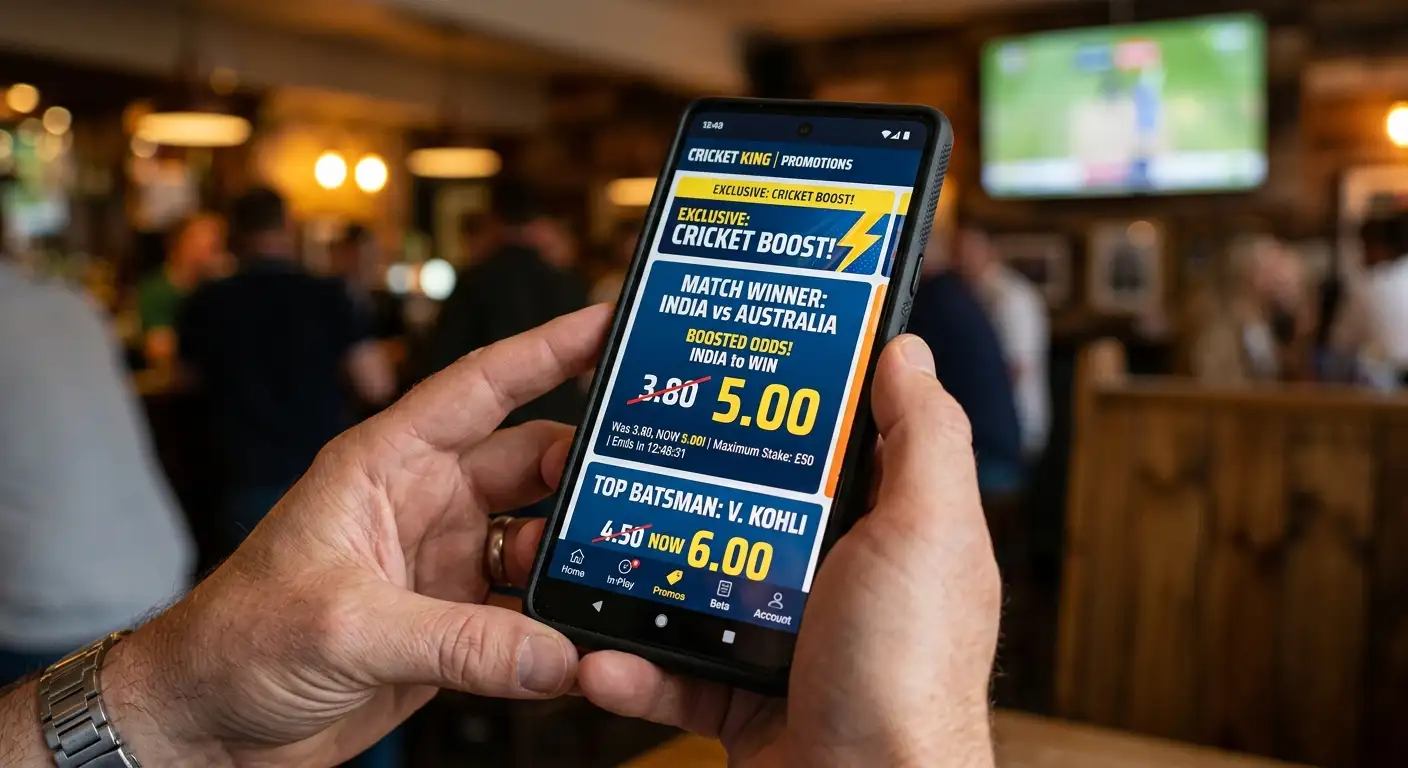
A price boost is the bookmaker offering you enhanced odds on a specific selection, usually heavily promoted and often capped to a small stake. BOG is a passive guarantee that applies automatically to eligible markets. The boost is a marketing hook designed to get you betting a particular thing the book wants you to bet; the guarantee is a structural benefit that improves whatever eligible bet you would have made anyway. One is bait, one is genuine value, and conflating them leads people to overrate boosts and underrate the guarantee.
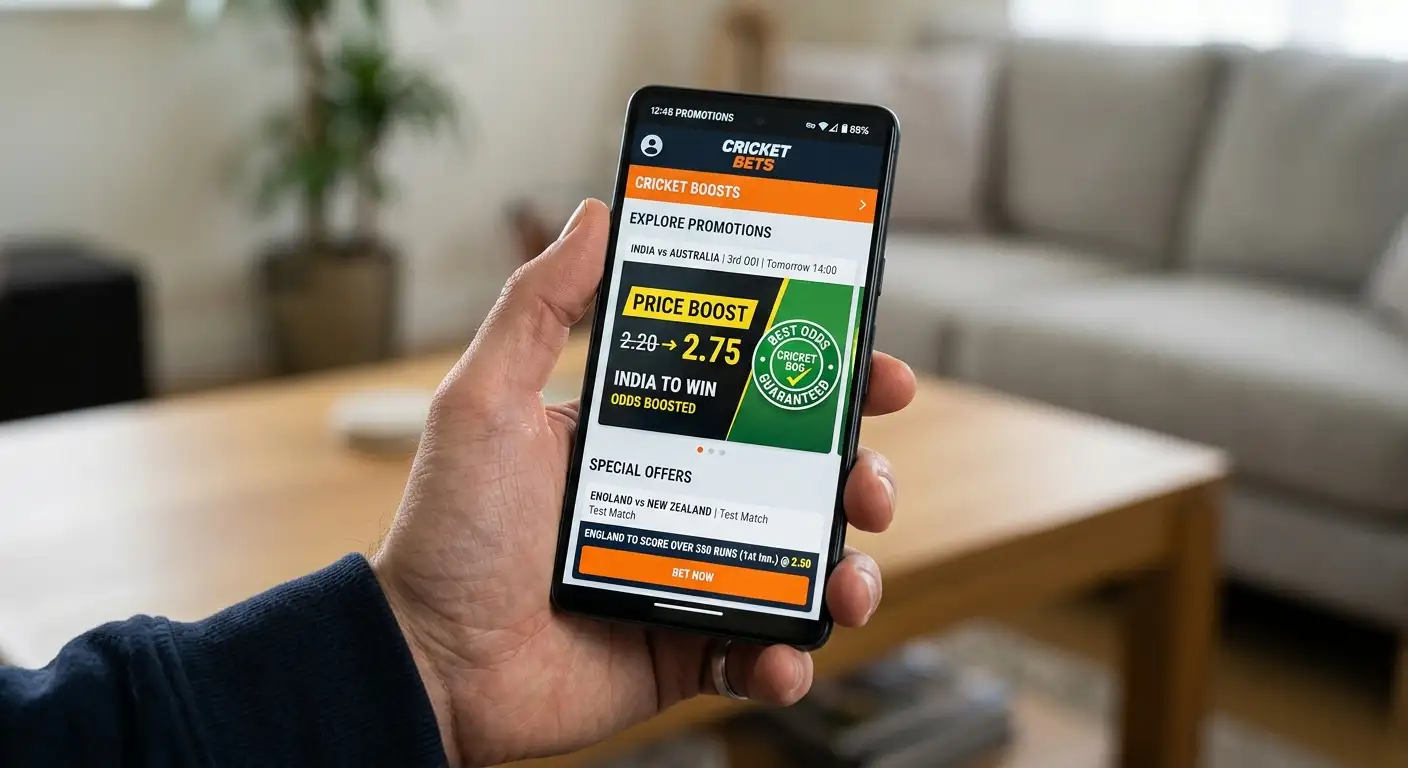
I am not saying all boosts are bad. Some, occasionally, are genuinely generous. But they come laden with stake caps and the suspicion that the book has boosted a price it was happy to lay anyway. BOG asks nothing of you and changes nothing about your selection. If you want my full, sceptical breakdown of when an enhanced price is real value and when it is theatre, I have written it up separately on cricket price boosts and enhanced odds. The headline difference is that you should chase value with boosts and simply accept value with BOG.

Which Sites Offer It and Whether to Care
The number of cricket markets that genuinely carry BOG is smaller than the marketing implies, which is exactly why you should know your own betting patterns before letting it sway your choice of site.
If you are predominantly an outright and futures bettor, taking early prices on tournaments and series, BOG is a real and recurring benefit and I would weight it meaningfully when choosing where to bet. The most expansive operators, the ones offering well over 150 markets on a Test and more than 80 on an IPL fixture, tend also to be the ones with the broadest BOG coverage, because depth and promotion strength travel together. If, on the other hand, you live in the in-play markets, BOG is mostly irrelevant to you and you should not let a prominent BOG badge distract you from what actually matters there, namely the margins and the speed of the platform.

My honest position, after years of weighing these things, is that BOG is a tiebreaker, not a headline. It will never make a poor site good. But between two otherwise comparable licensed operators, the one offering Best Odds Guaranteed on the outright markets you favour is the better home for your money, because it gives you the upside of a drifting price for free. Free is rare in this business. When it appears, take it, just make sure you are taking it on the bets where it actually applies rather than assuming it covers everything.
Does BOG apply to in-play cricket bets?
Generally no. In-play markets reprice continuously and have no orderly starting price for the guarantee to compare against, so Best Odds Guaranteed usually attaches only to outright and ante-post markets such as tournament or series winner. If you bet in-running, the price you take is the price you get.
Is BOG better than a price boost?
They serve different purposes. A price boost offers enhanced odds on a specific selection, usually capped and heavily marketed, while BOG passively pays you the bigger of your taken price and the starting price on eligible markets, with no catch. As the ECB has framed responsible promotion, its code of conduct signifies a commitment to balancing commercial offers with protecting the integrity of cricket, and BOG is the cleaner of the two because it asks nothing of you and improves a bet you would have made anyway.
Written by the editors at Best Cricket Betting Sites.