Cricket Overround Explained: How Bookmaker Margin Shapes Your Odds
 Available in US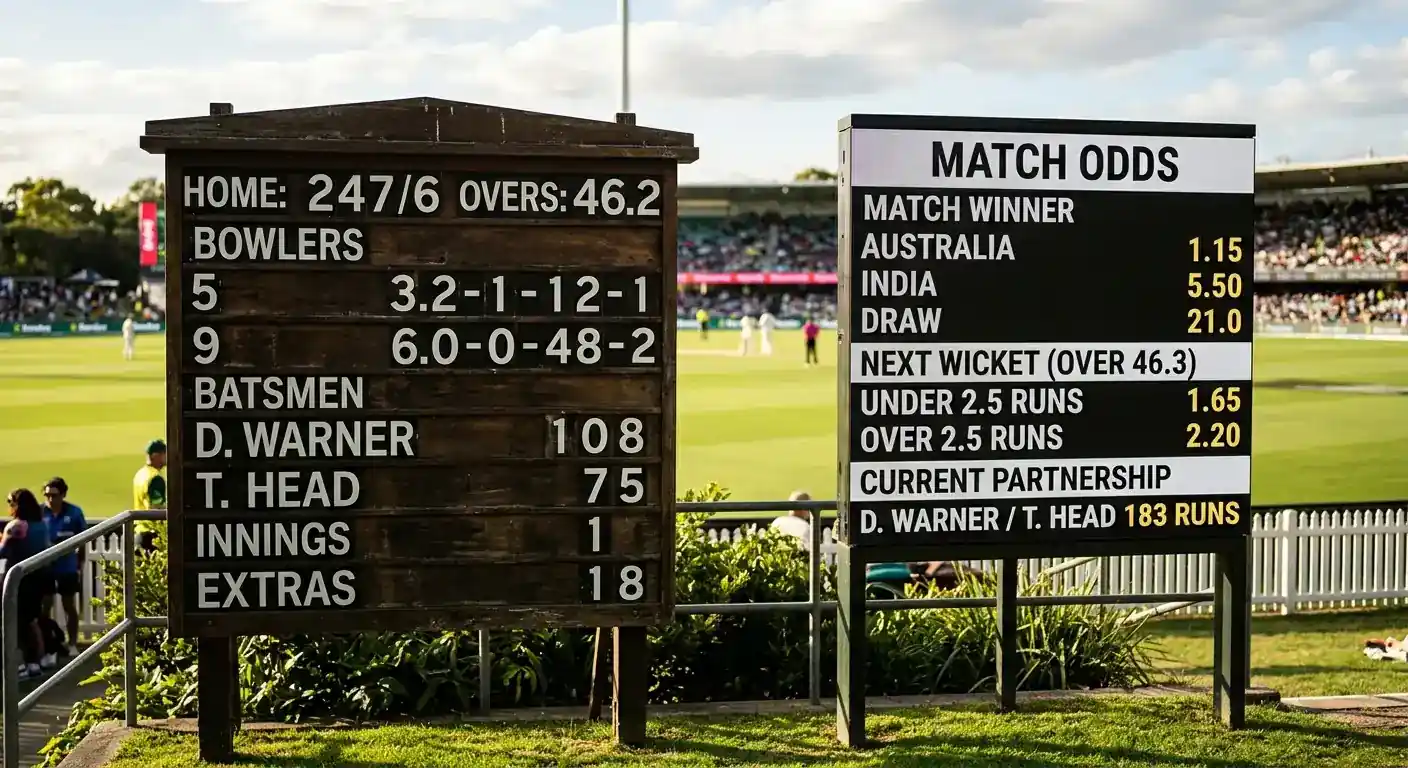
For my first two years of betting on cricket I had no idea I was paying a tax on every single bet. Not a literal tax, but a built-in margin that meant the prices I was taking were never quite as good as they looked. The day I learned to measure that margin, the overround, was the day my results stopped being mysterious. I could finally see, in cold percentages, which sites were quietly fleecing me and which were giving me a fair shake. If you take one analytical skill away from everything I have written, make it this one, because it is the difference between betting blind and betting with your eyes open.
Overround sounds like jargon, and it is, but the idea underneath it is something you already understand intuitively. A bookmaker is a business. It cannot offer perfectly fair odds or it would make nothing, so it shaves a little off every price and the sum of those shavings is its margin. Your job is to find the books that shave the least. Across the top of the UK market, the difference is real and measurable: margins on international Test and one-day matches at the sharper operators tend to run around four to five percent, while the broader industry sits closer to five to eight percent. That gap compounds over a season into serious money.
What Overround Really Is
Imagine a perfectly fair coin toss. Heads and tails each have a 50 percent chance, so a fair price on each would be 2.00 in decimal, and the two probabilities add up to exactly 100 percent. A bookmaker offering that coin toss would never quote 2.00 and 2.00, because it would break even at best. Instead it quotes something like 1.90 on each, and now the implied probabilities add up to more than 100 percent. That excess over 100 is the overround.
Every decimal price carries an implied probability, found by dividing one by the odds. A price of 2.00 implies a 50 percent chance, since one divided by two is 0.5. A price of 4.00 implies 25 percent. When you add up the implied probabilities of every outcome in a market, a fair book totals 100 percent and a real book totals more. A market summing to 105 percent carries a five percent overround. That five percent is the margin you are betting against, on top of whether your selection actually wins.

The reason this matters in cricket specifically is the sheer number of outcomes in many markets. A match-winner market in a Test has three results, since a draw is possible, and the more outcomes a bookmaker prices, the more places it can hide a slice of margin. This is why understanding overround is not academic. It is the lens through which you judge whether a price is generous, and it works regardless of whether the odds are shown as decimals or fractions, a topic I cover in my guide to decimal versus fractional cricket odds.
Calculating a Book’s Margin Yourself
This is the part people assume requires a maths degree, and it requires nothing more than a phone calculator and ninety seconds. I do it at the table, in the pub, on my phone, constantly, and it has saved me more money than any tipster ever made me.
Take every price in a market, convert each to its implied probability by dividing one into the decimal odds, then add the probabilities together. The amount by which the total exceeds 100 percent is the overround. Let me run a clean, made-up T20 example. Team A is priced at 1.80 and Team B at 2.10. One divided by 1.80 is roughly 55.6 percent. One divided by 2.10 is roughly 47.6 percent. Add them and you get 103.2 percent. The overround is 3.2 percent, which is a genuinely tight, punter-friendly book.

Now compare a lazier book on the same match: Team A at 1.70 and Team B at 2.00. That is 58.8 percent plus 50 percent, totalling 108.8 percent, an overround of 8.8 percent. Same match, same teams, but you are giving away nearly three times as much margin at the second site. If you bet that match a hundred times a season across both books, the cumulative cost of choosing the worse one is substantial, and you would never have noticed without doing the sum.

The discipline I want you to build is reflexive: before you take any price, glance at the other side of the market, do the quick division, and know what margin you are paying. It takes longer to describe than to do.
How Margin Varies by Format
Here is something that genuinely surprised me when I first measured it systematically across formats. The overround is not a fixed number a bookmaker applies everywhere. It moves with how confident the book is in its own pricing, and cricket’s formats produce very different confidence levels.
Test and one-day international markets, where there is decades of data, settled team strengths and relatively predictable patterns, tend to carry the tightest margins, often in that four to five percent range at the better operators. The book knows the sport well, competition between operators on flagship fixtures is fierce, and that competition squeezes margin down. These are the markets where a sharp punter can actually find value, because the prices are close to genuinely fair.
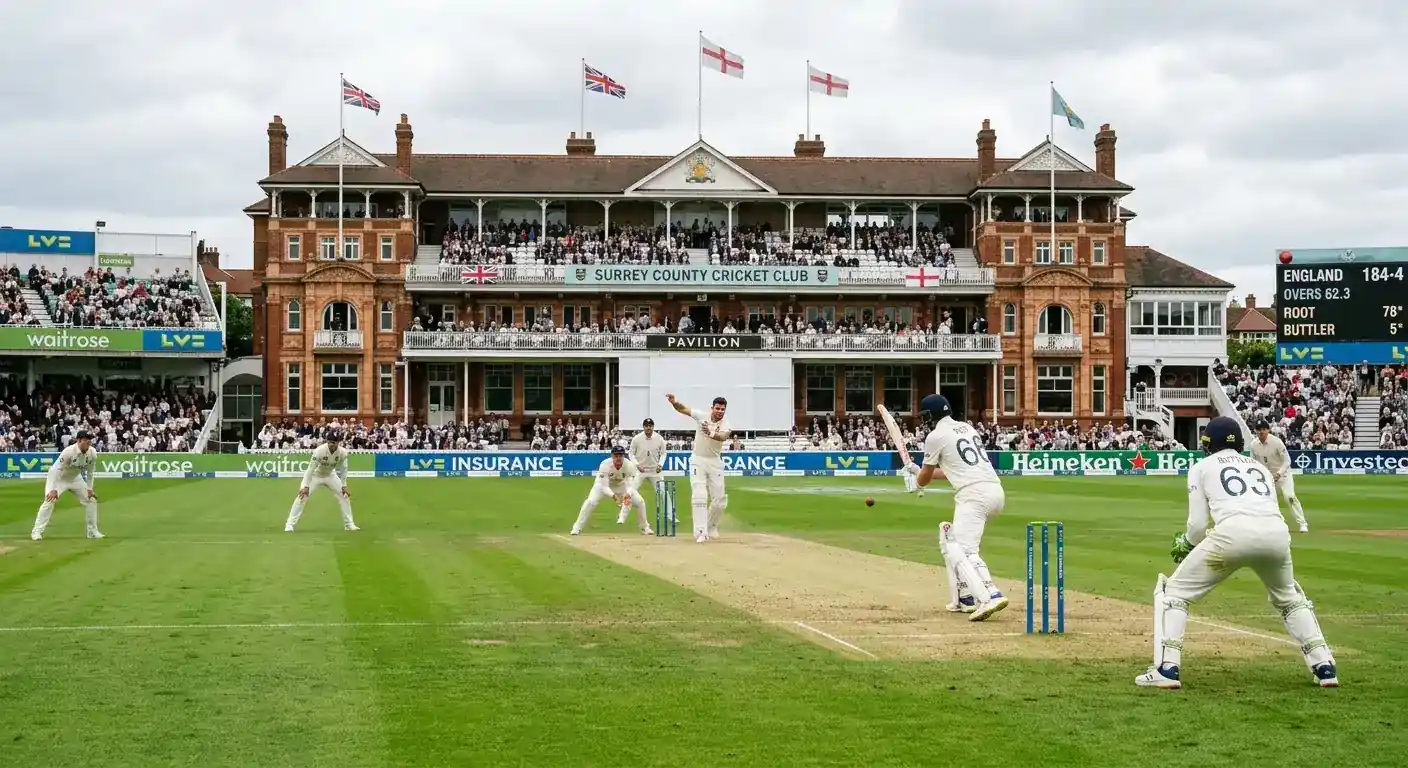
The picture changes the moment you move into shorter formats, exotic in-play markets, and the more obscure domestic and associate fixtures. T20 is more volatile, micro-markets are harder to price, and lower-profile matches attract less competitive attention, so books widen their margins to protect themselves against their own uncertainty. The same instinct that makes you want to bet the unusual market is the instinct the bookmaker is pricing against, and the difference shows up as a fatter overround. When I evaluate a site, I am not just asking whether its headline match-winner price is sharp. I am checking whether its margins stay reasonable in the markets I actually want to bet.
Finding the Lower-Margin Books
After years of measuring this, I can tell you the operators do not advertise their margins, for obvious reasons, so you have to find them yourself by doing exactly the calculation above across a few sites before a match.
The pattern that emerges is consistent. Operators that compete hardest on breadth and pricing tend to run tighter books across the board. As an illustration of breadth, the most expansive UK operator offers north of 150 markets on a single Test and more than 80 on an IPL or T20 fixture, and that depth usually travels with competitive margins, because a book confident enough to price that many outcomes is a book that knows its numbers. Breadth and sharp pricing are not the same thing, but in practice they tend to keep company.

My working method is simple and I commend it to you. Pick the match you want to bet, open two or three licensed sites, and calculate the overround on the specific market you have in mind at each. Bet the one with the lowest margin, assuming the rest of the experience is acceptable. Do this consistently and you are no longer a punter who takes whatever price is in front of him. You are a punter who pays the least possible tax on every bet, and over a long season that single habit will do more for your bottom line than any tip, system or hunch. The margin is the one part of betting you can control with certainty. Control it.
What overround is considered good for cricket?
On flagship Test and one-day international match-winner markets, an overround around four to five percent is sharp and punter-friendly, while the broader industry often runs five to eight percent. Anything noticeably above eight percent on a major market means you are paying too much margin and should check another licensed site.
Why is the margin higher on some markets than others?
Bookmakers widen their margin where they are less confident in their own pricing. Settled Test and one-day markets with decades of data carry tight margins, while volatile T20 micro-markets, in-play prices and obscure fixtures attract fatter overrounds to protect the book against its own uncertainty.
Created by the ”Best Cricket Betting Sites” editorial team.