GAMSTOP & Self-Exclusion: Taking a Break from Betting
 Available in US
The single most powerful tool a UK punter has is the ability to switch betting off entirely, and it is free, quick, and far less drastic than most people imagine. GAMSTOP is the national self-exclusion scheme, and I think of it as the betting equivalent of a circuit breaker, a way to put the whole thing beyond reach when you decide you need to. I want to explain it clearly and without any sense that using it is an admission of defeat, because the opposite is true. Choosing to take a break is one of the most level-headed decisions anyone in this hobby can make, and the fact that the tool exists at all is a sign of a regulated market that takes its responsibilities seriously.
This is a practical guide. I will explain what GAMSTOP is, how to register, what it does and importantly what it does not cover, and the other control tools that sit alongside it. The evidence that these tools work is encouraging: pilot programmes run by a major harm charity in recent years showed a 31 percent reduction in high-risk gambling sessions among participants, which tells you that deliberate breaks and limits genuinely change behaviour. None of this is theoretical. It is a set of levers you can pull today.
What GAMSTOP Is
I have recommended GAMSTOP to more than one person over the years, and the reaction is almost always the same: surprise that something so effective is so simple. It is a single registration that blocks you from every licensed online gambling site in Britain at once.
GAMSTOP is the national online self-exclusion scheme, and every UK Gambling Commission licensed operator is legally required to participate in it. That universality is the whole point and the whole power. When you register with GAMSTOP, you are not blocking yourself from one site, which would be trivially easy to work around by simply using another. You are blocking yourself from all of them simultaneously, across the entire licensed online market, with one action. The operators are obliged to check the GAMSTOP register and prevent registered individuals from gambling or opening new accounts for the duration they have chosen.

The principle behind it addresses the core weakness of trying to stop on willpower alone. In a moment of resolve you might close one account, but resolve fades, and a single site is a single temptation among many. GAMSTOP removes the entire field of temptation at once and keeps it removed even when your resolve wavers, which is precisely when you need the barrier most. It works because it does not depend on you maintaining the decision every day; you make the decision once, and the scheme enforces it for the period you set, across the whole licensed sector.
How to Register
The practical barrier to using GAMSTOP is almost nonexistent, which is exactly as it should be, because a tool meant to help people in difficult moments must not be hard to reach.
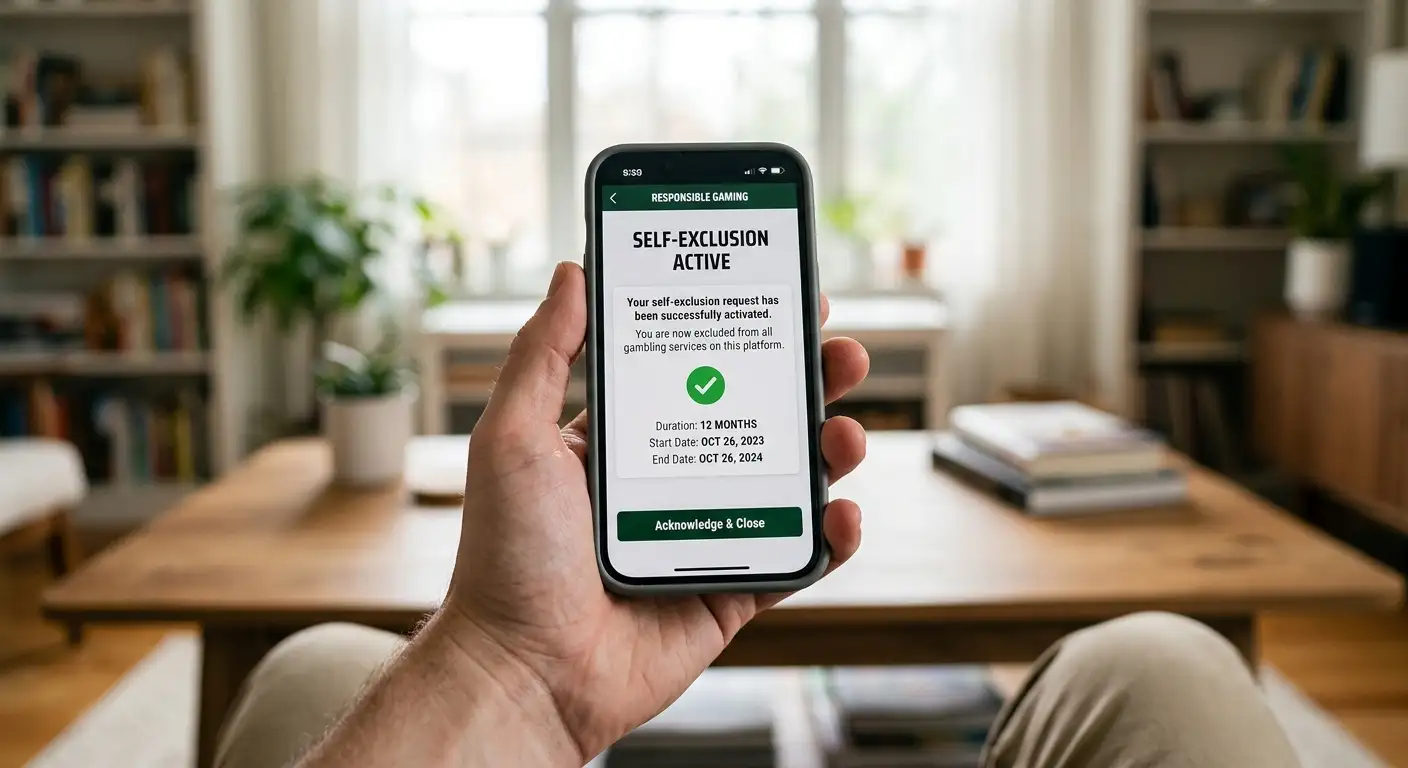
Registration is done directly through the GAMSTOP scheme, and it asks for the personal details needed to identify you across the operators’ systems, your name, date of birth, address, email and the contact details linked to your gambling accounts. Providing accurate details matters, because the scheme works by matching you against the accounts operators hold, and incomplete information weakens the block. Once registered, you choose your exclusion period, and the scheme propagates the block across the licensed online market. The whole process takes a matter of minutes.

You select an exclusion length at the outset, and the available periods are designed to suit different needs, from a relatively short reset to a longer, more committed break. I would offer one piece of advice drawn from watching people use it: choose a longer period than the minimum that feels comfortable in the moment. The instinct in a difficult moment is to pick the shortest option, leaving the door ajar, but the people I have seen benefit most are those who gave themselves a genuine stretch of time, long enough for the habit’s grip to loosen rather than just pausing it. The block cannot be undone on a whim before the period ends, and that immovability is a feature, not a flaw, because it protects the decision from the impulse to reverse it.
What It Does and Does Not Cover
This is the part that matters most to get right, because misunderstanding the scope of GAMSTOP can leave a gap that undermines the whole exercise, and I would rather you knew the limits clearly.
GAMSTOP covers licensed online gambling operating in Britain. That is comprehensive within its domain, blocking the online betting sites and apps that make up the licensed online market. What it does not cover is gambling outside that domain. It does not block physical betting shops or casinos, which have their own separate self-exclusion arrangements you would need to set up individually. It does not block unlicensed sites operating outside UK regulation, which is one more reason those sites are dangerous, because they sit beyond every protection the regulated market provides, including this one. And it does not block gambling that is not online gambling, such as lottery products bought in person.
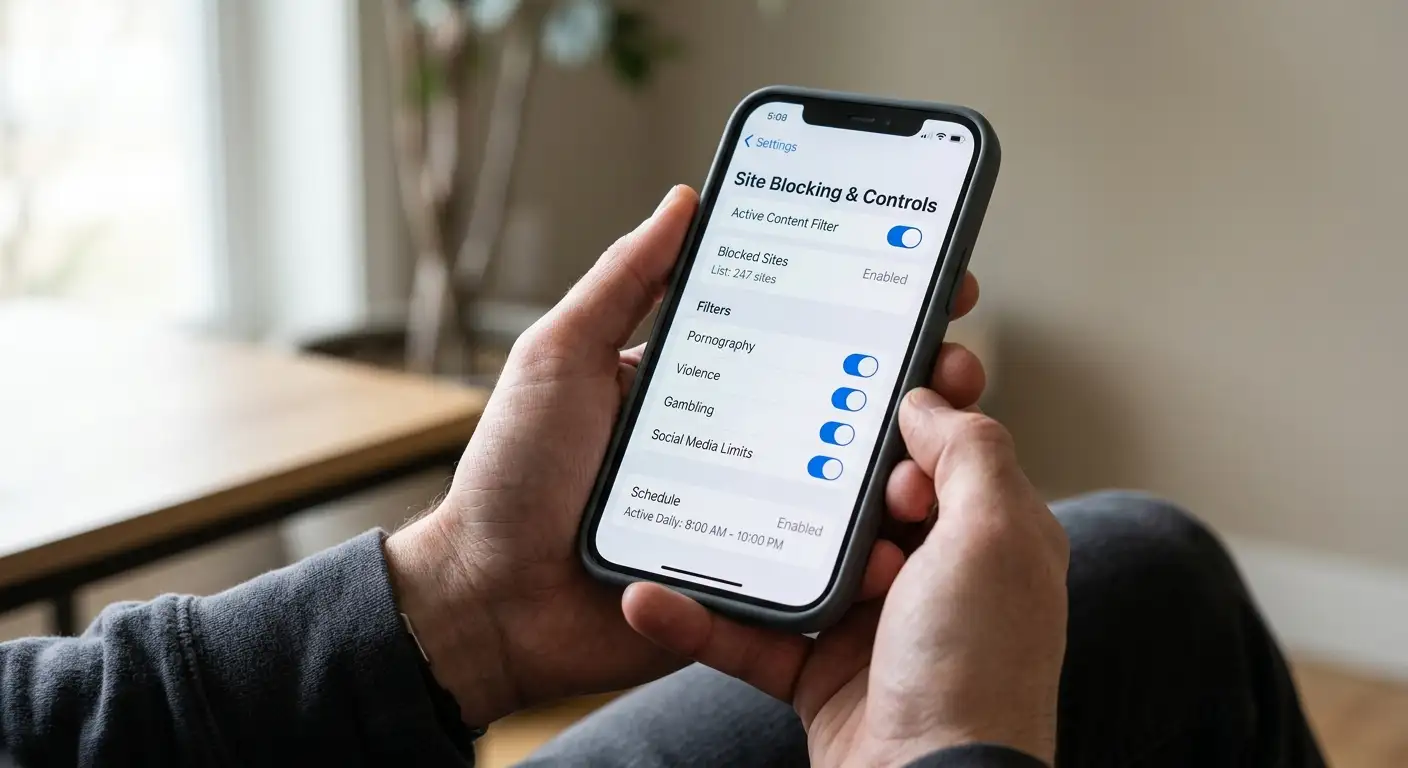
Understanding these boundaries lets you close the gaps deliberately. If your difficulty extends to physical premises, you would pair GAMSTOP with the in-person self-exclusion schemes that betting shops and casinos operate. The crucial warning is about unlicensed sites: a person who has excluded via GAMSTOP and then encounters an unlicensed operator that does not honour the scheme has stumbled into exactly the situation the exclusion was meant to prevent, with none of the safeguards. This is why I bang the drum about only ever using licensed sites in the first place, because the entire protective architecture, GAMSTOP included, only functions inside the licensed market. Know what the block covers, close the gaps it leaves, and steer well clear of anything that operates outside the system.
Other Control Tools
GAMSTOP is the heavy circuit breaker, but it sits at the end of a spectrum of lighter tools, and for many people the gentler controls are enough on their own.
Every licensed site offers deposit limits, which cap how much you can put into your account over a chosen period and which I consider the single best everyday discipline because they work before temptation rather than after regret. Alongside these are reality checks, pop-up reminders of how long you have been playing and what you have spent, and time-outs, short cooling-off breaks of anything from a day to a few weeks that let you step back without the longer commitment of full self-exclusion. The regulatory environment has also added structural limits, such as the stake caps on online slots of 5 pounds for those aged 25 and over and 2 pounds for players aged 18 to 24, which restrict the most intense products at the source. I cover the everyday tools in more depth in my piece on deposit limits and reality checks.

The right tool depends on where you are. If gambling has simply started to feel a little too present and you want to rein it in, a deposit limit and a reality check may be all you need. If you want a clean break to reset, a time-out gives you that without the longer commitment. And if you have decided you need gambling out of reach entirely, GAMSTOP is the comprehensive option that removes the whole licensed online field at once. These tools are not a hierarchy of failure, with self-exclusion as the bottom rung. They are a toolkit, and choosing the right one for your situation is a sign of good judgement rather than a lack of control. The evidence that breaks and limits reduce high-risk sessions is real, the tools are free and immediate, and using them is simply what sensible betting looks like. If gambling has begun to feel heavier than it should, reaching for one of these is always a step worth taking.
How long does GAMSTOP self-exclusion last?
You choose your exclusion period when you register, selecting from a range of lengths designed to suit different needs, from a shorter reset to a longer, more committed break. The block cannot be undone before the period ends, which protects the decision from being reversed on impulse. Many people benefit from choosing a longer period than feels comfortable in the moment.
Does GAMSTOP cover all UK betting sites?
It covers all licensed online gambling operating in Britain, since every UK Gambling Commission licensed operator is legally required to participate. It does not cover physical betting shops or casinos, which run separate self-exclusion schemes, nor unlicensed sites operating outside UK regulation. This is one more reason to only ever use properly licensed operators.
Prepared by the Best Cricket Betting Sites editorial staff.