In-Play & Live Cricket Betting: How UK Sites Handle Live Markets
 Available in US
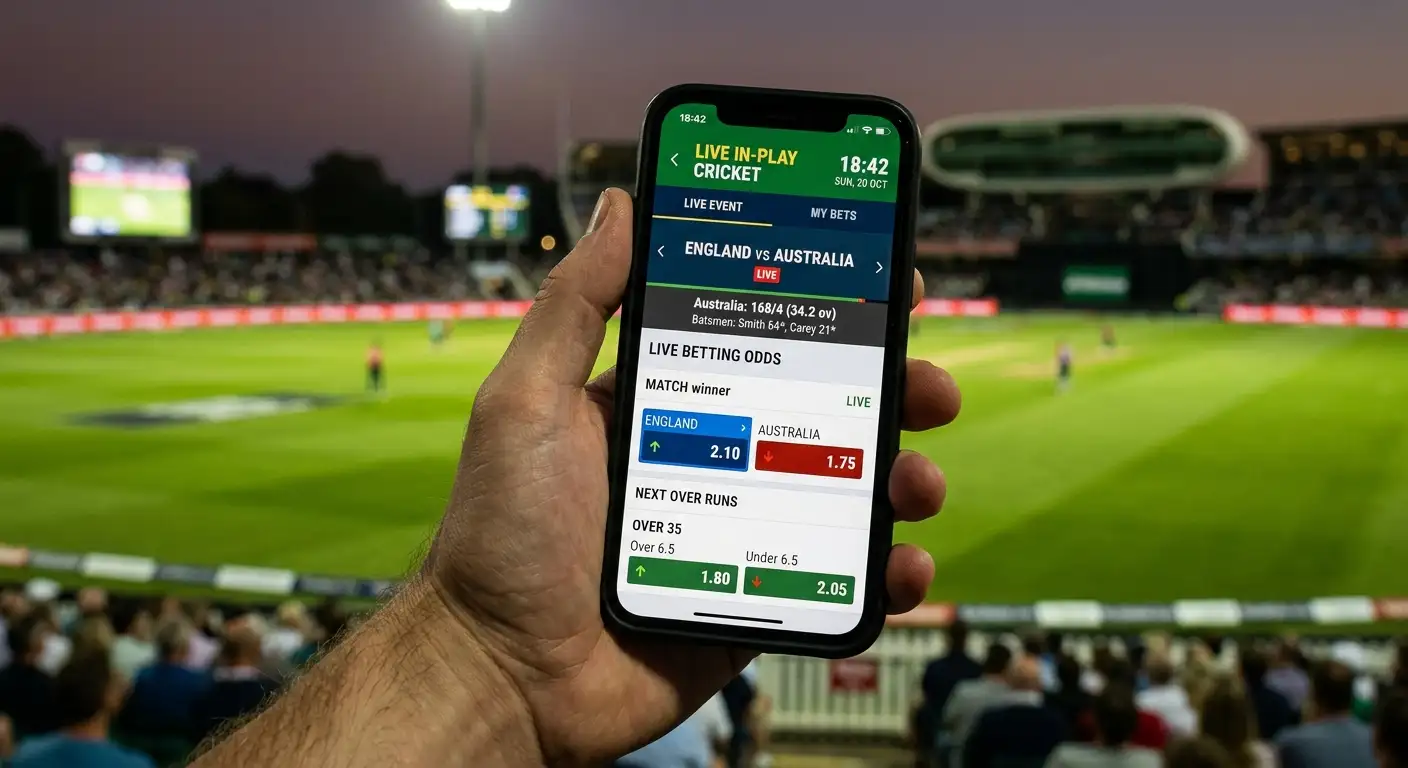
The moment that taught me how in-play cricket really works was a tense run chase where I watched a price I wanted vanish before my thumb reached the screen. A wicket fell, the market suspended, and by the time it reopened the odds had moved a country mile. I’d been too slow — not by minutes, by seconds. Live cricket betting rewards a particular kind of discipline that pre-match betting simply doesn’t demand, and the punters who treat it like a faster version of their usual game tend to learn the difference the expensive way.
Live, or in-play, betting now sits at the heart of the cricket market. Player-specific and live markets together account for over 35% of all cricket bets worldwide, and that share keeps climbing as the technology gets slicker and the appetite for ball-by-ball action grows. This guide is about how UK sites actually run those live markets — the mechanics under the bonnet, why prices move and suspend the way they do, where the genuine risks lie, and how to bet the live game without becoming the punter whose thumb is always a second too late.
What Happens When You Bet on a Live Cricket Match
Pre-match betting is a photograph; in-play betting is a film, and the film is being edited in real time by a machine that reacts faster than you can. Understanding what that machine is doing is the foundation of betting the live game competently.
When a cricket match goes live, the bookmaker’s pricing model recalculates the odds continuously as the state of the game changes. Every ball is an input: a boundary shifts the required run rate, a wicket reshapes the probability of every outcome, a tightening over swings momentum back toward the bowling side. The model ingests this and republishes prices, sometimes several times an over. What you’re betting against isn’t a person setting odds by feel — it’s an algorithm processing the live match state and adjusting faster than any human could. With live and player markets making up more than a third of global cricket betting, operators have poured serious investment into these models, and the sharpest of them are very hard to beat on reaction speed alone.
The practical consequence is that your edge in-play almost never comes from reacting to what just happened — the model has already repriced that. It comes from anticipating what’s about to happen, or from reading something the model weights poorly: a batter who looks set but is about to face a bowler who troubles him, a pitch starting to misbehave before the scoreboard reflects it, conditions shifting under lights. In-play betting rewards the punter who’s watching closely and thinking a ball ahead, not the one chasing the last result. That’s the whole game in a sentence, and it took me a couple of seasons of getting it wrong to absorb it.
It helps to picture what the model is actually weighing. In a limited-overs chase it’s tracking the required run rate against wickets in hand, the identity of the batters at the crease, the overs the weaker bowlers still have to get through, and the historical scoring patterns at that ground — all updating ball by ball. The places it’s beatable are the human ones: it can’t see that a batter has started flinching at the short ball, or that the new man in has a glaring weakness against left-arm spin, until the runs or wickets actually arrive. That gap between what the game is showing and what the scoreboard has confirmed is the only reliable seam of value in live cricket, and it closes the instant the next ball is bowled. Everything I do in-play is built around getting into that seam before the model does.
Cash Out: The Feature That Cuts Both Ways
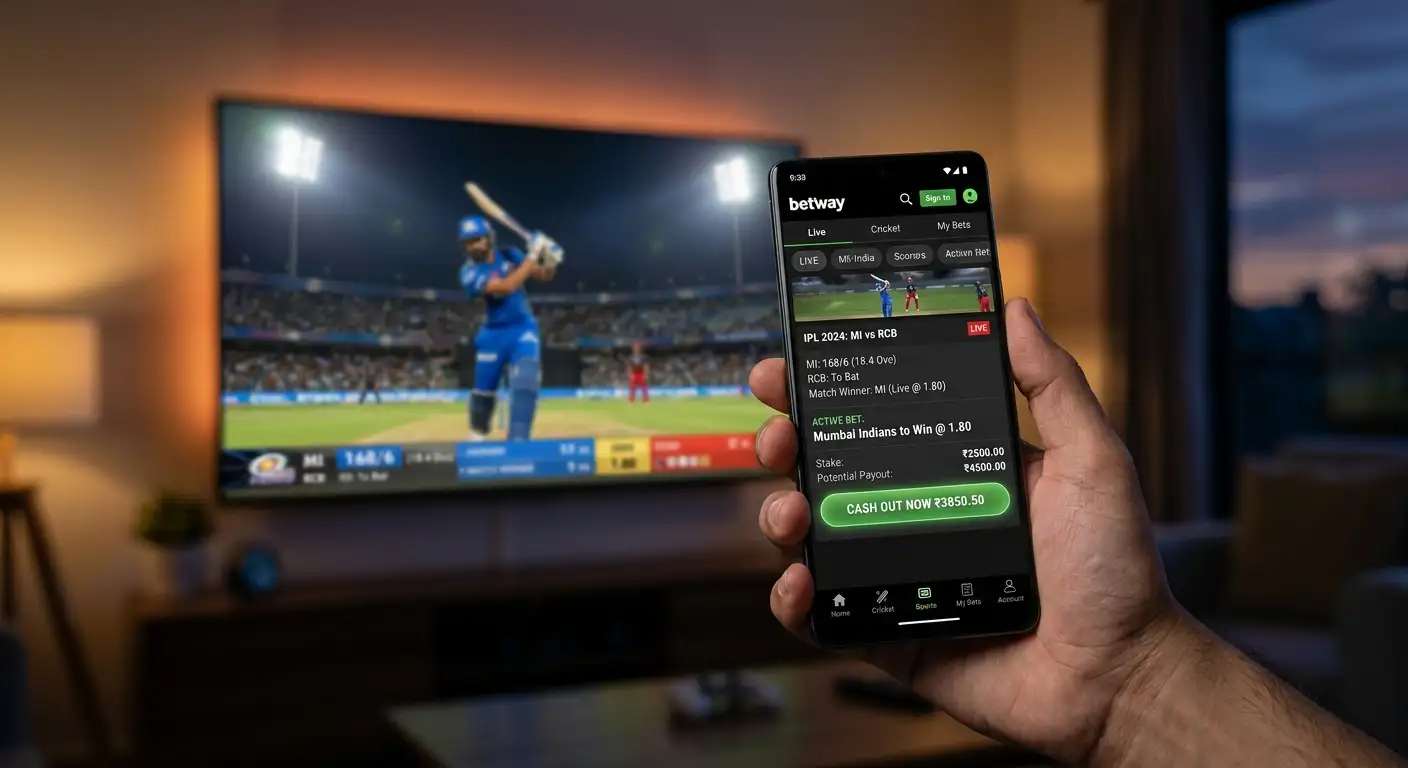
Cash out feels like a gift the first time you use it — the bookmaker offering to settle your bet early, letting you lock in a profit or rescue some of a stake heading south. It took me a while to understand that a feature the operator offers so eagerly is rarely a feature designed primarily for my benefit.
The mechanics are simple enough. At any point during a live bet, the site offers you a sum to settle now rather than wait for the result. If your selection is winning, that sum is a portion of your potential return; if it’s losing, it’s a portion of your stake rescued. The figure is calculated from the current live odds, which means — and this is the part that matters — the bookmaker’s margin is applied to the cash-out price just as it is to everything else. You’re not getting the mathematically fair value of your position; you’re getting that value minus the operator’s cut, taken a second time on top of the cut already baked into your original bet.
Most sites layer two refinements on top. Partial cash out lets you settle a portion of your bet and leave the rest running, which can feel like the best of both worlds but simply splits the margin cost across two settlements. Auto cash out lets you set a trigger price at which the system settles automatically, useful if you can’t watch the whole match but, again, charged at the operator’s terms. Neither changes the underlying truth that cashing out is a service you pay for, and the smoother and more prominent a site makes these tools, the more it expects you to use them — which tells you everything about whose interest they primarily serve.
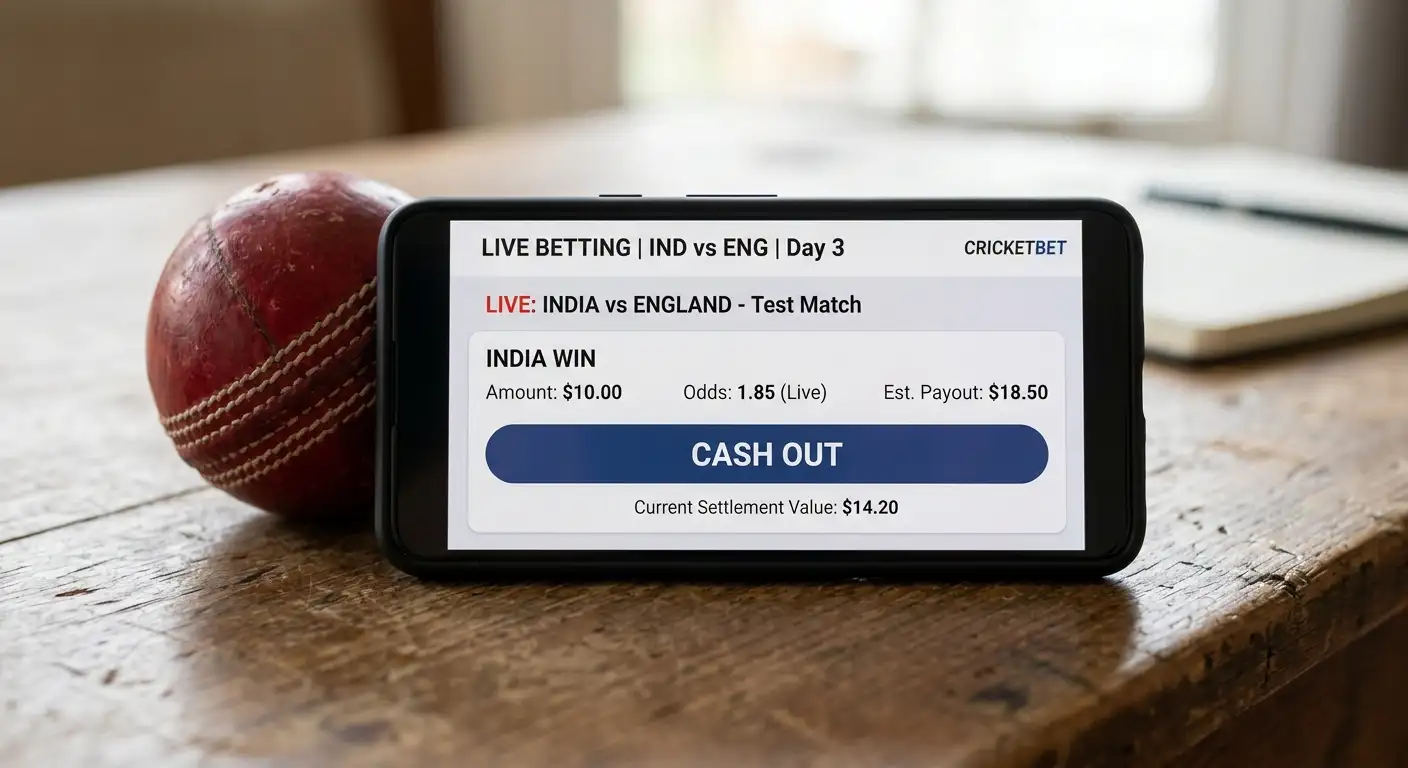
That doesn’t make cash out useless. Locking in a profit before a volatile final over, or stepping out of a chase that’s curdling, can be the right call when the alternative is watching a likely win evaporate. But I treat it as a risk-management tool, not a value play. The long-run expected value of cashing out is negative relative to letting the bet run, because of that second helping of margin — so I cash out when I want to reduce variance or when my read on the game has genuinely changed, never simply because the green number is tempting. The convenience hides a cost that compounds across every bet you settle early, which is exactly why the operator makes the feature so prominent and so easy to reach.
Ball-by-Ball and the Micro-Market Explosion
The most addictive corner of in-play cricket is the ball-by-ball market, where you can bet on the outcome of the very next delivery, and it’s also where I do most of my hand-sitting. The granularity is dazzling and the temptation to bet every ball is real.
Ball-by-ball and micro-markets let you bet on individual deliveries, the runs in the next over, the method of the next dismissal, and a sprawling list of in-the-moment propositions. The operators with the deepest cricket books carry an extraordinary breadth here — well over a hundred markets on a single high-profile fixture, more than eighty on an IPL or T20 game — and a large slice of that depth is live micro-markets refreshing ball by ball. This is the engine room of the over-35% that live and player markets now represent, and it’s clearly where the operators see the future of cricket betting.
Here’s my honest counsel after years of it: the micro-markets are where engagement is highest and edge is lowest. Each individual delivery is close to a coin flip dressed up in a tight price, the margin on these fast-refreshing markets tends to be fatter than on the headline lines, and the sheer frequency of betting opportunities is precisely what erodes a bankroll through a thousand small leaks rather than one big loss. I bet ball-by-ball markets sparingly and only when I have a specific read — a bowler I expect to dot up a struggling batter, say — never as a way to stay involved between the bets that actually matter. The breadth is a feature for the operator first and the punter second.
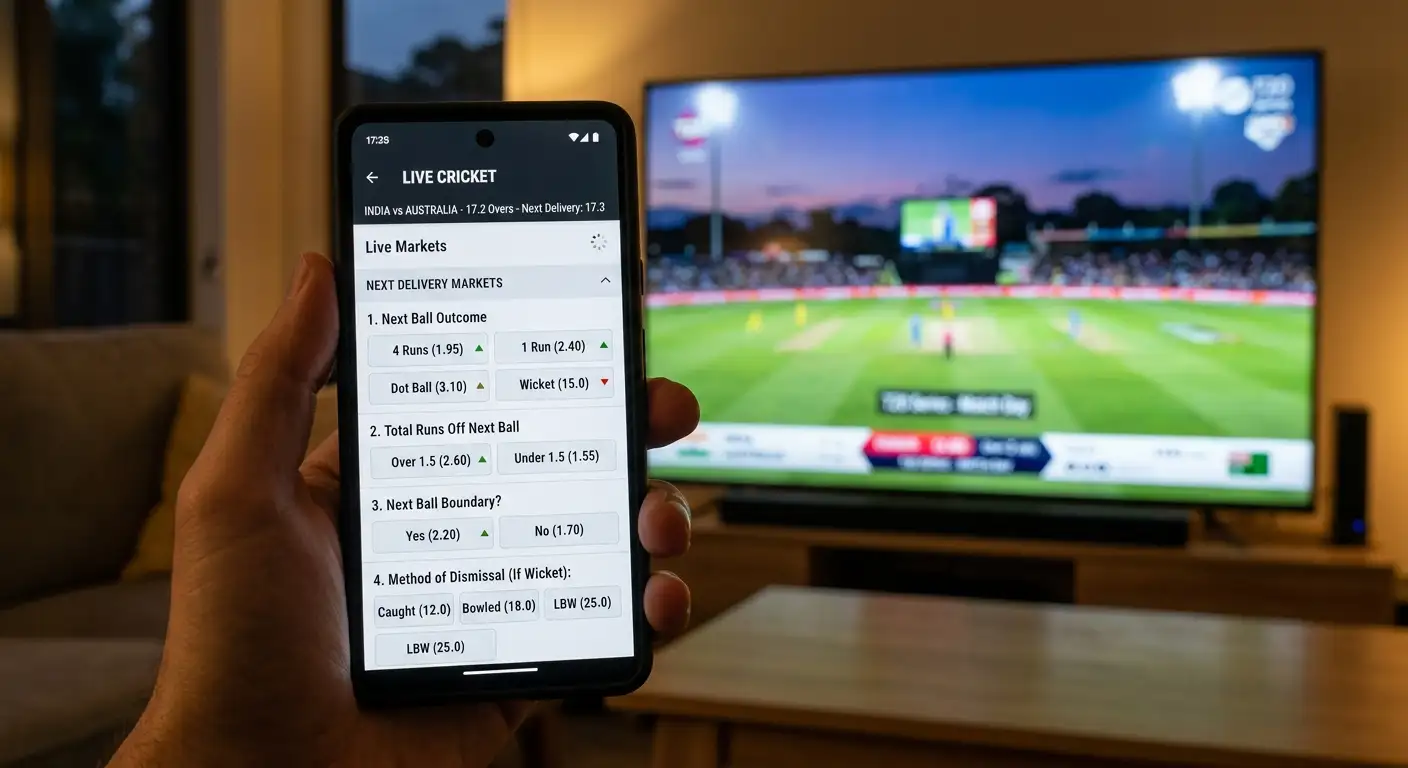
The design intent is worth naming, because it’s the same logic that drives every fast-feedback product. A market that settles every six balls gives you a result, and a small hit of either relief or regret, several times an over. That rhythm is engineered to keep you betting, and it works on exactly the part of the brain that’s least interested in long-run expected value. I’m not above the pull of it — nobody is — which is why my defence is structural rather than willpower-based. I decide before a match how much, if anything, I’m prepared to put through micro-markets, and once that’s spent I close the tab. The markets aren’t going anywhere, and the discipline of treating them as an occasional, capped indulgence rather than a running tap is the difference between enjoying the live game and being slowly bled by it.
Watching the Game While You Bet
You cannot bet the live game well on the scoreboard alone, which is why live streaming on betting sites became such a draw — and why the timing of what you’re watching matters more than most punters realise.
Many UK operators now stream cricket directly within the betting interface, letting you watch and bet in one place. The coverage has broadened enormously: some providers run thousands of cricket events a month across formats, including the emerging machine-driven eCricket products, with live markets attached to each. For the punter, in-principle this is ideal — you see the ball that the market is reacting to. The catch is latency. A streamed feed, whether on a betting site or a broadcaster, runs behind the live action by a number of seconds, and that delay is fatal if you’re trying to react to what you’ve just watched. By the time the boundary you saw appears on your screen, the market has already moved on the boundary that actually happened.
So I use streaming for reading, not reacting. Watching the game tells me how a batter is moving, whether the pitch is gripping, how the bowler’s rhythm looks — context that helps me anticipate. What it cannot do is let me beat the market to an event, because the event reached the bookmaker’s model before it reached my screen. Treat the stream as a window into the texture of the game and it’s invaluable. Treat it as a way to scoop the odds and the delay will quietly cost you, bet after bet.
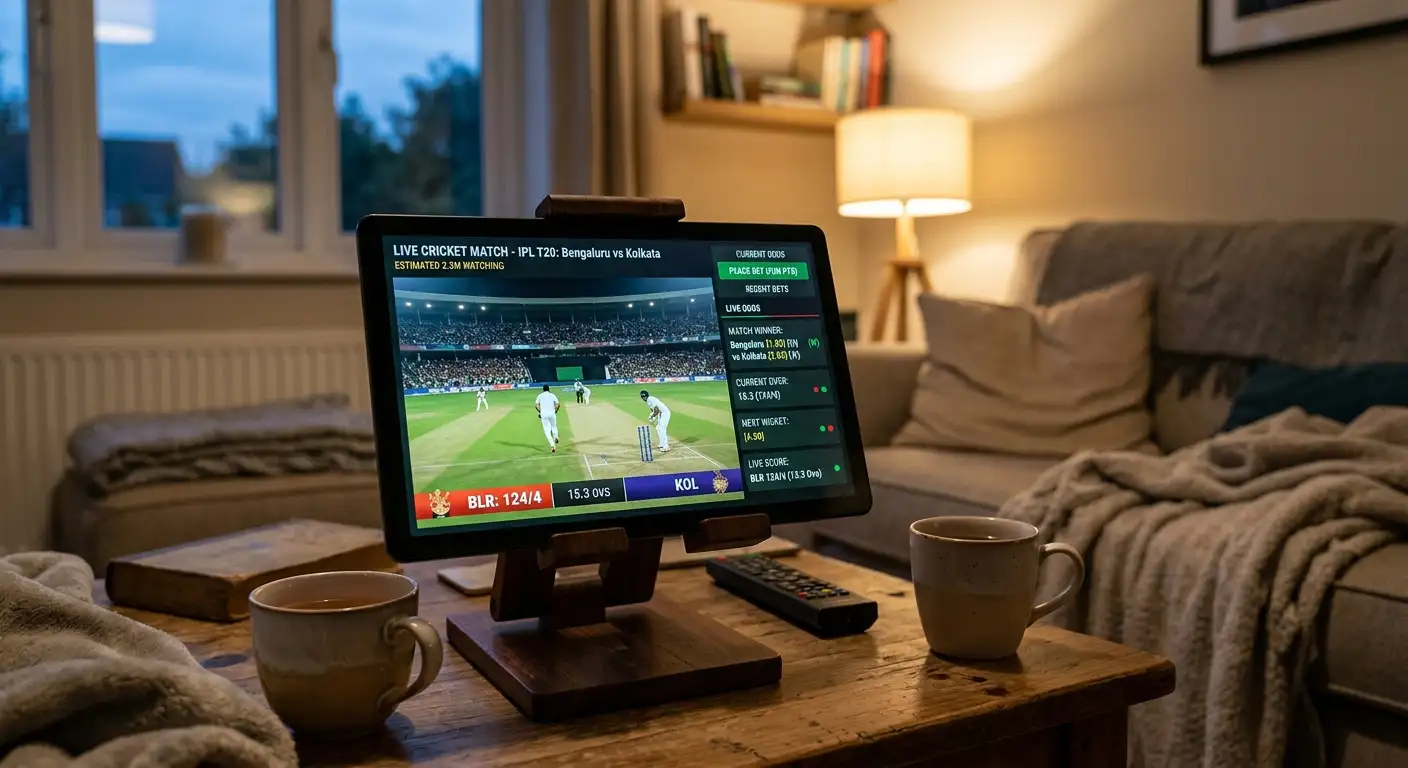
There’s a practical access wrinkle to mention too, because it catches people out. Most operators gate their streams behind a funded account or a recent bet, and the rights they hold vary by competition and territory — a site might stream a domestic T20 league but not an international series, depending on the broadcast deals. The eCricket and simulated products are a different category again, running continuously precisely because they sidestep the rights complications of the real game. I’d never let streaming availability decide which site I use for serious betting, but if watching within the betting interface matters to you, check what’s actually covered before a major series rather than discovering on the day that your operator doesn’t hold the rights to the cricket you wanted to watch.
Suspensions, Latency and the Mechanics of Delay
The single most disorienting experience for a new in-play punter is the suspension — the market freezing mid-over just as you reach for it. Once you understand why it happens, the frustration turns into useful information.
Markets suspend for a simple reason: between deliveries, and especially around key events, the bookmaker’s model needs a beat to digest what just happened before it can publish a safe price. The instant a ball is bowled, the market typically suspends, then reopens once the outcome is processed and the odds recalculated. Around a wicket, a boundary, or a review, that suspension protects the operator from being picked off by punters who’ve seen the event before the price has updated. It’s not the site being awkward — it’s the model defending itself against exactly the latency edge that streaming might otherwise hand you.
This is also why chasing a price you saw a moment ago is a losing habit. The odds you glimpsed before a wicket fell are gone the instant the wicket falls, and the reopened market reflects a changed game. The disciplined move is to decide your price in advance — to know what you’d bet and at what odds before the relevant ball is bowled — so that when the market reopens you’re acting on a plan rather than reacting to a number. In-play cricket punishes hesitation and punishes greed in roughly equal measure, and the suspension mechanism is the structural reason why.
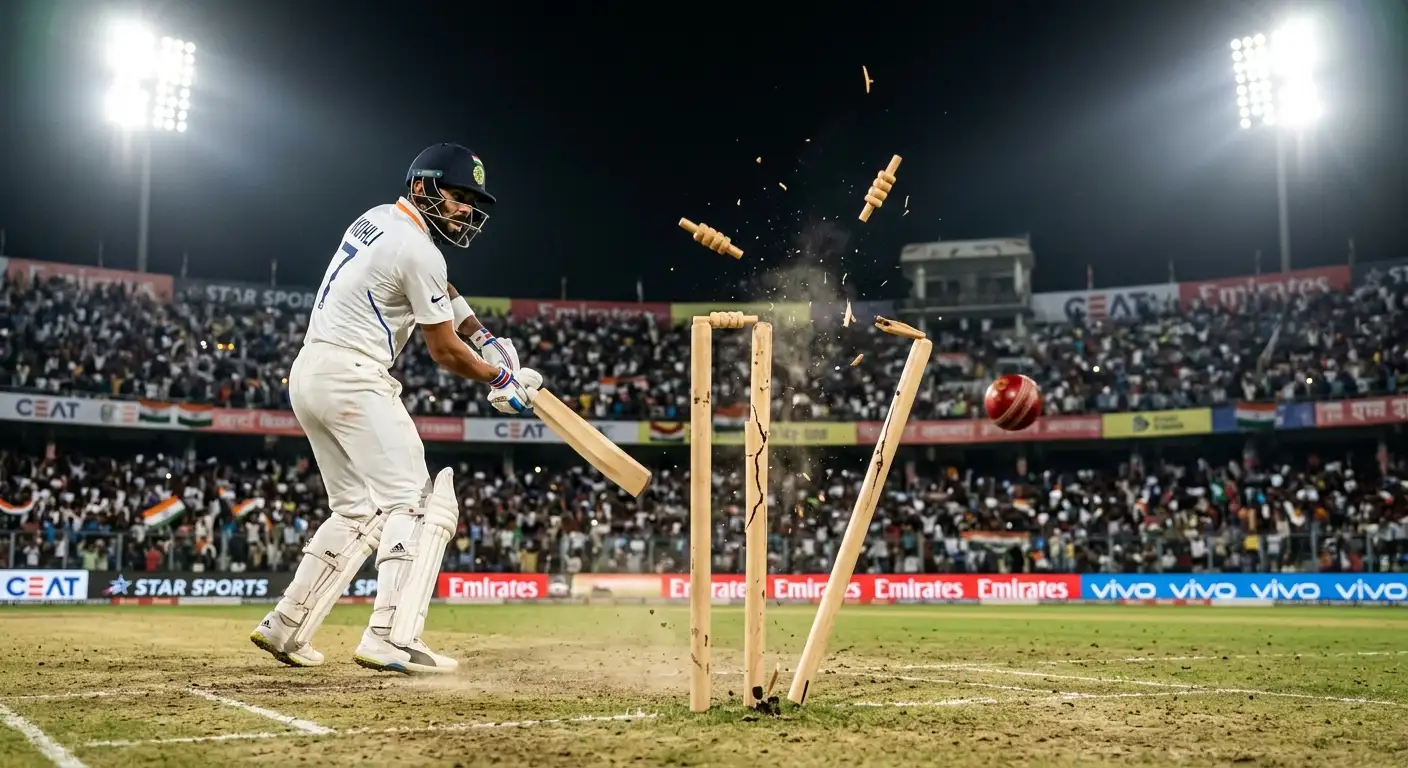
The flip side, worth knowing so you don’t panic, is that suspensions are also where the occasional genuine opportunity appears. When a market reopens after a wicket, there’s a brief window before the model fully settles where the price can lag the new reality — particularly in fast-moving T20 chases. Catching that is hard and inconsistent, and I’d never build a strategy on it, but it’s the reason experienced in-play punters keep their selection and stake ready to go the instant a market comes back live. The whole discipline of live betting is about being prepared before the moment arrives, because the moment itself lasts seconds and the model is faster than your reflexes every single time.
The Integrity Question Behind Every Live Bet
There’s a reason I’ll only bet the live game at a UKGC-licensed site, and it has nothing to do with convenience. In-play cricket, and the micro-markets in particular, sits closest to the sport’s oldest and ugliest problem.
The scale of the illegal market is genuinely staggering: as much as $1.7 trillion is wagered annually on illegal markets controlled by organised crime, and cricket’s in-play and session markets have historically been a favourite target because a single over is so much easier to manipulate than a whole match. The corruptors have always understood this, and they’ve always gone after the people best placed to deliver. As Alex Marshall, the ICC’s anti-corruption chief, once put it, corruptors love captains — and his unit had five captains approached in a single year. That’s the live market’s shadow, and it’s why the regulated framework matters so much. The manipulation that money funds doesn’t target the match result, which is too hard to fix cleanly; it targets the small, in-play brackets where a single agreed outcome can be delivered without anyone in the crowd noticing.

The reassurance, and it’s a real one, is that the legitimate market is monitored far more thoroughly than the headlines suggest. Sportradar’s integrity service flagged 1,116 suspicious matches across 12 sports in 94 countries in a recent year — a number that sounds alarming until you set it against the other figure: over 99.5% of sporting events worldwide were monitored with no sign of suspicion at all. The overwhelming majority of cricket is clean, and the monitoring is precisely why. When you bet in-play at a licensed UK operator, your bet runs through feeds that are watched, on markets that are regulated, in a system designed to catch the manipulation that the illegal market exists to enable. That protection is not a footnote — it’s the single best reason to keep your live betting inside the regulated UK market and well away from the offshore sites whose prices look generous for reasons that should worry you. The same integrity infrastructure is part of why a UK licence is worth more than a marginally better offshore price, and how the sport is actually policed against fixing is worth understanding in full if you bet the live game seriously.
Markets suspend around each delivery, and especially around wickets, boundaries and reviews, because the bookmaker’s pricing model needs a moment to process what just happened before publishing a safe price. The suspension protects the operator from being picked off by punters who have seen an event before the odds update. It is normal and unavoidable, which is why the disciplined approach is to decide your price before the relevant ball is bowled rather than chasing a number you glimpsed a second ago. Cash out is calculated from the current live odds with the bookmaker’s margin applied, which means it carries a second helping of the operator’s cut on top of the margin already in your original bet. Over the long run its expected value is negative relative to letting the bet run to settlement. It is genuinely useful as a risk-management tool when you want to reduce variance or your read on the game has changed, but it should not be treated as a way to extract extra value. A streamed feed runs several seconds behind the live action, so you cannot use it to react faster than the market, which has already moved on the event before it reaches your screen. Streaming is valuable for reading the texture of the game, such as how a batter is moving or whether the pitch is gripping, which helps you anticipate. Treat it as context rather than a timing edge, because the delay means reacting to what you have just watched is always a step behind the odds.Why do live cricket markets get suspended mid-over?
How does cash out value compare to letting a bet run?
Does live streaming affect in-play betting decisions?
Created by the ”Best Cricket Betting Sites” editorial team.