How to Check a UKGC Licence: Verifying a Cricket Site in Minutes
 Available in US
The single most important check you will ever make as a cricket punter takes under two minutes and costs nothing, and the overwhelming majority of people skip it entirely. They see slick branding, a generous welcome offer and a familiar-looking interface, and they assume legitimacy. That assumption is exactly what unlicensed operators rely on. I have spent years watching people lose money not to bad luck but to sites that were never going to pay out in the first place, and almost every one of those losses was preventable with a licence check that I am about to teach you to do in your sleep.
This is not a vague exhortation to gamble responsibly. It is a concrete, repeatable procedure for verifying that a cricket betting site holds a genuine UK Gambling Commission licence, using the regulator’s own public register. By the end you will know why the licence matters far more than the marketing, exactly how to confirm one, what the licence actually obliges an operator to do for you, and the red flags that scream unlicensed. The UK runs a single national regulator, which makes this verification cleaner than in almost any other jurisdiction, and there is no excuse for not doing it before you deposit a penny.
Why the Licence Matters More Than the Marketing
I once helped someone try to recover a four-figure balance from a site that had simply stopped responding, and the grim lesson was that there was nothing to recover and no one to complain to, because the site had never been licensed in the UK at all. That is the difference a licence makes, and it is everything.
A UK Gambling Commission licence is not a badge of quality in the marketing sense. It is a set of binding legal obligations that protect you in concrete ways. A licensed operator must segregate your funds from its operating money, so your balance is not at risk if the business hits trouble. It must offer responsible-gambling tools, honour self-exclusion, and submit to oversight from a regulator with real enforcement power. It answers to an independent complaints process. An unlicensed site offers none of this, and when it decides to keep your money, you have no meaningful recourse whatsoever.

The framework behind this licence is taken seriously, and the obligations attached to it have only grown. Since April 2025 every licensed operator must pay a statutory levy of between 0.1 and 1.1 percent of its gross gambling yield, with online operators charged at the top of that scale, and the head of one major harm charity called the levy transformational for planning support services, noting that the year-to-year unpredictability of the old voluntary system had made multi-year programmes impossible. That obligation, like fund segregation and self-exclusion, is a condition of the licence rather than a choice, which is exactly why the licence is the foundation everything else rests on. Bet at a licensed site and you are inside a system designed to protect you. Bet outside it and you are on your own.
Using the Public Register
Here is the actual procedure, and I want you to do it the next time you consider a new site, because reading about it is useless if you never apply it.
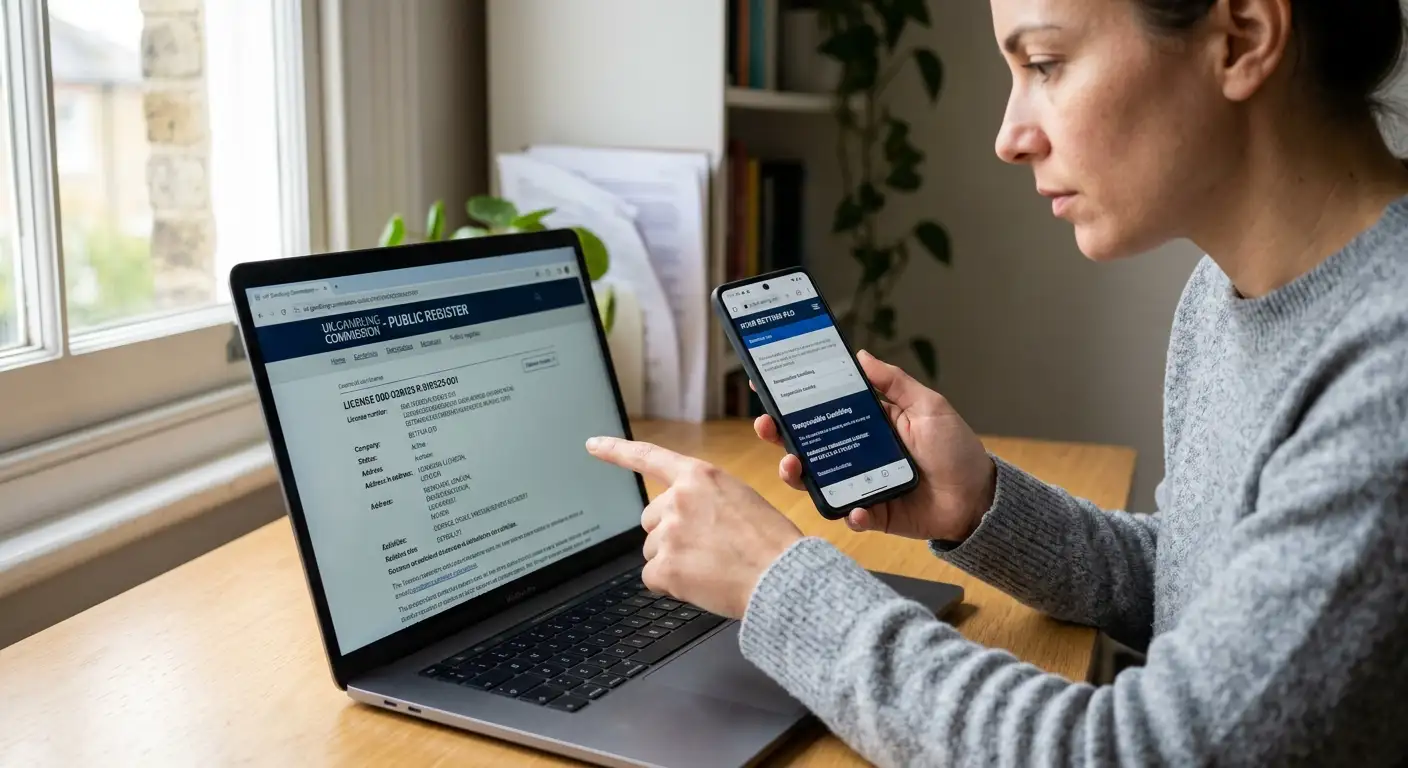
Every operator legally permitted to offer gambling to people in Britain appears on the Gambling Commission’s public register, which the regulator maintains and makes freely searchable. The register sits behind a regulated sector of real scale, more than 8,100 licensed gambling premises, including over 5,600 betting shops, operate in Britain, and the online brands you bet with are licensed within that same framework. The register lists every licensed business, the activities it is permitted to offer, and the status of its licence. To verify a site, you search the register for the operator’s name or licence number and confirm three things: that the business appears, that its licence is current and active rather than lapsed or surrendered, and that the company named matches the company actually running the site you are looking at.

That last point catches people out, so dwell on it. Operators often run multiple brands under one licensed company, so the brand name on the site may differ from the legal company name on the licence. A legitimate site resolves this for you by displaying its licence details, including the licensed company name and licence number, in its footer, precisely so you can cross-reference. The procedure, then, is to find the licence details in the site’s footer, take the company name and number, and confirm them on the regulator’s register. If the footer details match a current licence on the register, the site is genuine. If the footer is vague, the details do not match, or there is no licence information at all, you have your answer. Two minutes, every time, no exceptions.
What the Licence Covers
Knowing how to verify a licence is only half the value. Knowing what the licence actually guarantees you is what turns the check from a box-tick into genuine understanding.
A UKGC licence obliges the operator to a long list of player protections, and these are the things you are confirming the site must provide when you verify it. Your funds must be handled according to the regulator’s rules on segregation and protection. The operator must provide the safer-gambling tools that let you set deposit limits, take time-outs and self-exclude. It must verify your identity and age, which protects against fraud and underage gambling. It must conduct itself according to standards on fair terms, transparent promotions and honest advertising, and it sits within the framework that funds harm treatment through the statutory levy. These obligations are not optional extras the operator chooses to offer. They are conditions of holding the licence at all.

This is why I find the licence check so empowering rather than tedious. When you confirm a licence, you are not just confirming the site is real. You are confirming that a whole apparatus of protection is legally owed to you, from fund segregation to complaint resolution. The marketing tells you what the operator wants you to feel. The licence tells you what the operator is legally bound to do. I trust the second far more than the first, and so should you.
Red Flags of an Unlicensed Site
After years of looking, I can usually smell an unlicensed operation within seconds, and I want to pass on the specific signals so you can too.
The clearest red flag is the absence of licence details, or licence details that point to an overseas regulator rather than the UK Gambling Commission. A site targeting UK punters that is licensed only in some distant jurisdiction is offering you none of the protections we have discussed, regardless of how official its foreign credentials look. The second flag is any reluctance to verify your identity, because a site that lets you bet and withdraw without proper checks is a site ignoring the rules that protect you, and that is a feature of the unregulated market, not a convenience.
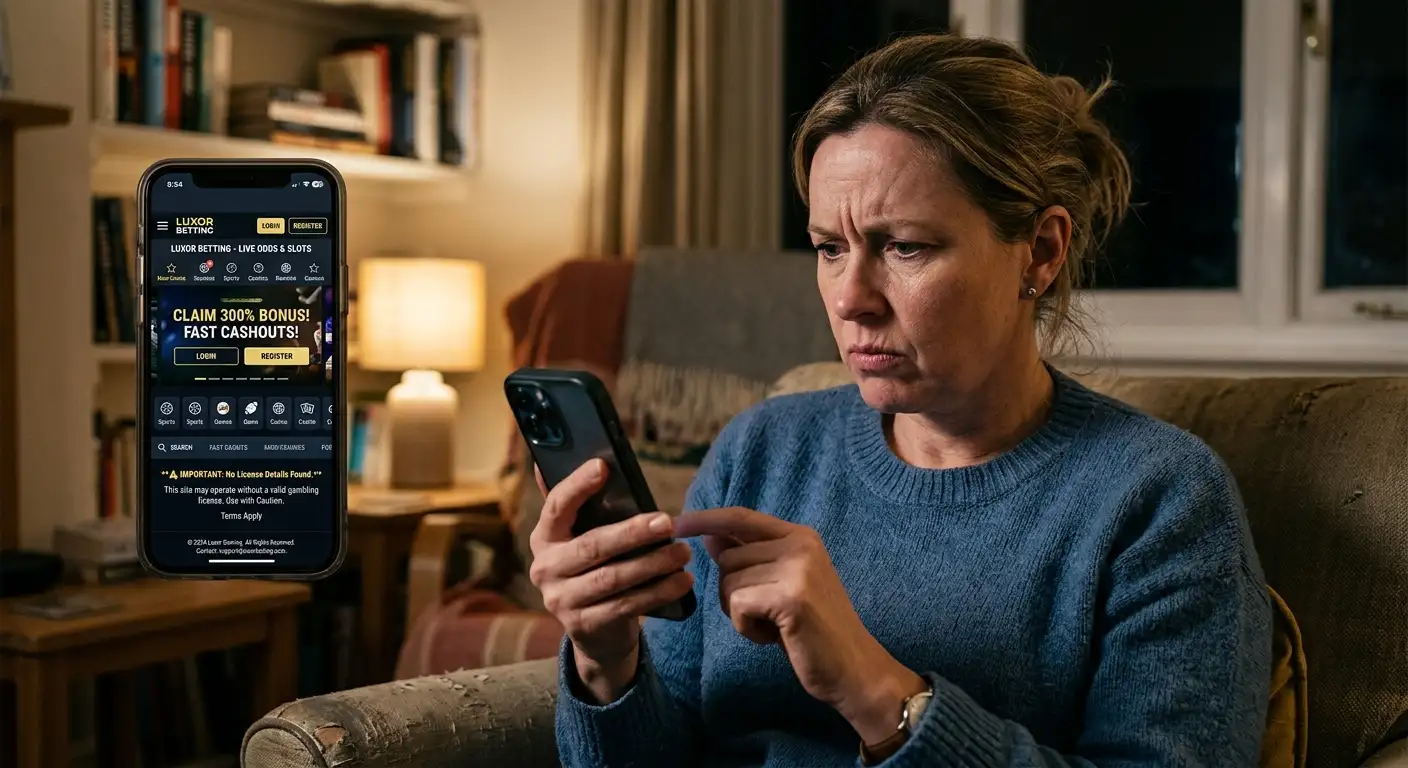
Other warning signs cluster together: promotions that seem implausibly generous, vague or contradictory terms, payment methods that try to route around the UK credit card ban, and pressure to deposit quickly. Above all, treat an unsolicited approach, a message or advert steering you to a specific unfamiliar site, with deep suspicion, and never install or sign up via a link someone sent you. The honest sites have nothing to hide and display their licence proudly in the footer. The dishonest ones obscure, deflect and dazzle. Your defence is the same two-minute check every time: find the licence, confirm it on the register, and walk away from anything that fails. It is the cheapest insurance in all of betting, and the people who skip it are the people who learn its value the hard way. For the broader picture of what safe, legal cricket betting looks like in this country, I have set it all out in my guide to safe and legal cricket betting in the UK.
Where is the UKGC public register?
The UK Gambling Commission maintains a freely searchable public register of every operator licensed to offer gambling in Britain. You can search it by the operator’s company name or licence number to confirm the business is listed and that its licence is current and active before you sign up or deposit.
What does a licence number look like?
A UK Gambling Commission licence number is a unique reference assigned to the licensed company, displayed in the footer of a legitimate operator’s site alongside the licensed company name. Take that number, search it on the regulator’s public register, and confirm it matches a current licence held by the company actually running the site.
Prepared by the Best Cricket Betting Sites editorial staff.